A simile is a figure of speech that compares two different things using the words “like” or “as.” Similes help readers imagine ideas more clearly by connecting them to familiar images.
The word “transient” means something temporary, short-lived, or not lasting very long. While the word itself is useful, using similes instead of simply saying “transient” makes writing more colorful and expressive. Instead of telling readers something is temporary, you show them how temporary it feels. This makes your writing more creative, vivid, and memorable for both kids and educators.
Benefits of Using Similes for Transient
- Makes ideas clearer: Readers can easily understand short-lived experiences when they are compared to familiar things.
- Adds emotion: Similes help show feelings connected to temporary moments.
- Improves creativity: Writing becomes more imaginative and less repetitive.
- Engages young learners: Children grasp concepts faster when ideas are linked to everyday experiences.
- Enhances storytelling: Stories feel more alive when descriptions are vivid and relatable.
Why Similes for Transient Are Important?
Similes for transient moments help writers express the beauty and sadness of things that do not last. Life is full of temporary experiences—seasons, emotions, trends, and even opportunities. When we compare these fleeting moments to things like bubbles or shooting stars, readers immediately understand their delicate and passing nature.
Using similes strengthens communication because it paints pictures in the reader’s mind, and as a result, ideas stay longer in memory even if the moment described is brief.
Similes for As Transient As
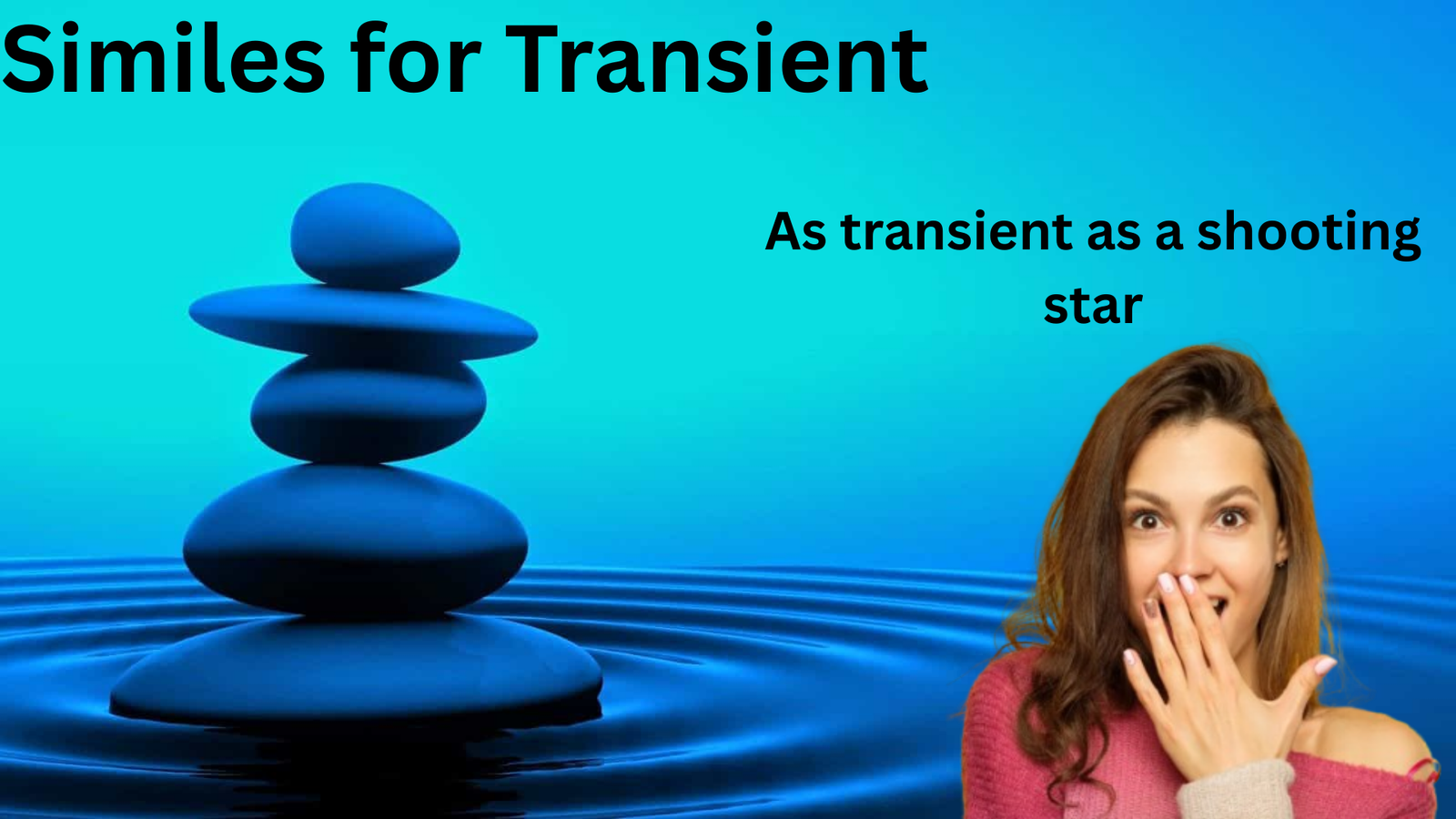
1. As transient as a shooting star
Explanation: A shooting star appears suddenly in the night sky, and although it shines brightly, it disappears within seconds, which makes it a perfect symbol of something brief yet beautiful.
Examples:
- Her happiness was as transient as a shooting star, but it lit up her whole face.
- The opportunity seemed as transient as a shooting star, so he acted quickly.
- Their meeting felt as transient as a shooting star, yet it was unforgettable.
- The fame he gained was as transient as a shooting star, and soon it faded.
- The rainbow glow was as transient as a shooting star, but everyone admired it.
Best Use: “I thought the moment would last forever.” “No, it was as transient as a shooting star, and we had to cherish it.”
2. As transient as a soap bubble
Explanation: A soap bubble floats gently and shines with beautiful colors, but it bursts quickly, which makes it a strong comparison for fragile and temporary things.
Examples:
- Her excitement was as transient as a soap bubble, and it popped when she heard the news.
- The dream felt as transient as a soap bubble, yet it sparkled in her heart.
- His anger was as transient as a soap bubble, so it vanished quickly.
- Their argument was as transient as a soap bubble, and soon they laughed again.
- The trend was as transient as a soap bubble, but everyone followed it for a while.
Best Use: “Will this feeling stay?” “It’s as transient as a soap bubble, so enjoy it while it lasts.”
3. As transient as morning dew
Explanation: Morning dew glistens beautifully on the grass, but once the sun rises, it disappears quickly, which makes it a gentle image of temporary beauty.
Examples:
- Her sadness was as transient as morning dew, and it faded with time.
- The cool air felt as transient as morning dew, yet it refreshed us.
- His doubt was as transient as morning dew, so confidence returned soon.
- The silence was as transient as morning dew, and noise followed quickly.
- Their fear was as transient as morning dew, but courage replaced it.
Best Use: “I’m worried this joy won’t last.” “It’s as transient as morning dew, so let’s appreciate it now.”
4. As transient as a passing cloud
Explanation: A cloud drifts across the sky and soon moves away, which makes it an ideal symbol of something that does not stay for long.
Examples:
- His anger was as transient as a passing cloud, and peace returned soon.
- The problem seemed big, but it was as transient as a passing cloud.
- Her doubt was as transient as a passing cloud, so confidence grew again.
- The fear felt as transient as a passing cloud, yet it worried us briefly.
- The sadness was as transient as a passing cloud, and hope followed.
Best Use: “This trouble feels endless.” “No, it’s as transient as a passing cloud.”
5. As transient as a blink of an eye
Explanation: A blink happens in an instant, and because it is so quick, it perfectly represents something extremely short-lived.
Examples:
- The accident happened as transient as a blink of an eye, yet it shocked everyone.
- Childhood feels as transient as a blink of an eye, so we should treasure it.
- The opportunity vanished as transient as a blink of an eye.
- The smile appeared as transient as a blink of an eye, but it warmed my heart.
- The silence lasted as transient as a blink of an eye before laughter began.
Best Use: “It happened so fast.” “Yes, it was as transient as a blink of an eye.”
6. As transient as a flash of lightning
Explanation: Lightning lights up the sky suddenly and powerfully, but it disappears almost instantly, which makes it a strong comparison for moments that are brief yet intense.
Examples:
- His anger was as transient as a flash of lightning, but it frightened everyone.
- The idea came as transient as a flash of lightning, and then it slipped away.
- Her excitement felt as transient as a flash of lightning, yet it energized her.
- The fear struck as transient as a flash of lightning, but calm followed.
- The fame was as transient as a flash of lightning, so it did not last long.
Best Use: “That moment shocked me.” “Yes, it was as transient as a flash of lightning.”
7. As transient as a summer breeze
Explanation: A summer breeze feels pleasant and cool, but it passes quickly, which makes it a gentle symbol of short-lived comfort.
Examples:
- The relief felt as transient as a summer breeze, yet it refreshed us.
- His kindness appeared as transient as a summer breeze, but it mattered.
- The silence was as transient as a summer breeze, and noise returned.
- The cool air seemed as transient as a summer breeze, so we enjoyed it.
- Their happiness was as transient as a summer breeze, but it was sweet.
Best Use: “Why didn’t it last?” “Because it was as transient as a summer breeze.”
8. As transient as a melting snowflake
Explanation: A snowflake is delicate and unique, but it melts the moment it touches warmth, which perfectly represents fragile, temporary things.
Examples:
- Her fear was as transient as a melting snowflake, yet it felt real.
- The beauty was as transient as a melting snowflake, but unforgettable.
- His doubt faded as transient as a melting snowflake, and confidence grew.
- The joy was as transient as a melting snowflake, so we cherished it.
- The calm felt as transient as a melting snowflake, but it soothed us.
Best Use: “It disappeared so quickly.” “Yes, like a melting snowflake.”
9. As transient as a fading echo
Explanation: An echo repeats a sound briefly, but it slowly fades away, which makes it a meaningful symbol of something that does not last.
Examples:
- Her voice felt as transient as a fading echo, yet it lingered in memory.
- The laughter was as transient as a fading echo, but it warmed us.
- His anger passed as transient as a fading echo, and peace returned.
- The excitement seemed as transient as a fading echo, so we acted fast.
- The rumor spread as transient as a fading echo, but it soon vanished.
Best Use: “Will people remember it?” “Maybe, but it’s as transient as a fading echo.”
10. As transient as autumn leaves in the wind
Explanation: Autumn leaves are carried away by the wind, and although they are beautiful, they do not stay long on the trees.
Examples:
- The season felt as transient as autumn leaves in the wind, yet it was lovely.
- Their laughter was as transient as autumn leaves in the wind, but joyful.
- The trend faded as transient as autumn leaves in the wind, and new ones came.
- His sadness passed as transient as autumn leaves in the wind.
- The opportunity slipped away as transient as autumn leaves in the wind.
Best Use: “Why did it end so soon?” “Because it was as transient as autumn leaves in the wind.”
11. As transient as a spark in the dark
Explanation: A spark glows brightly for a second, but it disappears quickly, which makes it a vivid image of something short-lived.
Examples:
- The hope was as transient as a spark in the dark, yet it inspired us.
- His excitement flashed as transient as a spark in the dark.
- The idea appeared as transient as a spark in the dark, but it changed everything.
- The smile shone as transient as a spark in the dark.
- The fear struck as transient as a spark in the dark, and then it faded.
Best Use: “It was quick but powerful.” “Yes, like a spark in the dark.”
12. As transient as a drifting shadow
Explanation: A shadow moves with light and disappears when the light changes, which makes it a soft symbol of temporary presence.
Examples:
- His doubt was as transient as a drifting shadow, but it passed.
- The fear felt as transient as a drifting shadow, yet it troubled her.
- Their silence was as transient as a drifting shadow.
- The memory seemed as transient as a drifting shadow.
- The tension faded as transient as a drifting shadow.
Best Use: “It didn’t stay long.” “No, it was like a drifting shadow.”
13. As transient as a ripple on water
Explanation: Ripples form when something touches water, but they quickly fade away, which makes them a strong image of brief effects.
Examples:
- The news spread as transient as a ripple on water, but it soon faded.
- His words caused change as transient as a ripple on water.
- The fear moved through the crowd as transient as a ripple on water.
- The excitement felt as transient as a ripple on water.
- The joy passed as transient as a ripple on water.
Best Use: “It didn’t last.” “It was like a ripple on water.”
14. As transient as a firework in the sky
Explanation: Fireworks burst brightly and beautifully, but they disappear within moments, symbolizing brief brilliance.
Examples:
- Her fame was as transient as a firework in the sky, yet it dazzled us.
- The joy felt as transient as a firework in the sky.
- His success seemed as transient as a firework in the sky.
- The excitement rose as transient as a firework in the sky.
- The celebration felt as transient as a firework in the sky.
Best Use: “It was amazing but short.” “Yes, like a firework in the sky.”
15. As transient as a passing smile
Explanation: A smile can appear warmly on someone’s face, but it may fade within seconds, which makes it a gentle comparison for emotions that do not last long.
Examples:
- Her happiness was as transient as a passing smile, but it brightened the room.
- His confidence seemed as transient as a passing smile, yet it helped him speak.
- The peace felt as transient as a passing smile, and soon tension returned.
- Their agreement was as transient as a passing smile, but it felt sincere.
- The excitement rose as transient as a passing smile, then it settled down.
Best Use: “Did you notice her joy?” “Yes, but it was as transient as a passing smile.”
16. As transient as a candle flicker
Explanation: A candle flickers softly in the wind, and although it gives light, it can fade or go out quickly, which symbolizes fragile and brief moments.
Examples:
- His hope was as transient as a candle flicker, yet it guided him.
- The silence felt as transient as a candle flicker, and noise followed.
- Her courage seemed as transient as a candle flicker, but it mattered.
- The joy shone as transient as a candle flicker before fading.
- The calm appeared as transient as a candle flicker, and worry returned.
Best Use: “Why didn’t it last?” “It was as transient as a candle flicker.”
17. As transient as a whisper in the wind
Explanation: A whisper carried by the wind disappears almost instantly, which makes it a soft and poetic symbol of something short-lived.
Examples:
- The rumor spread as transient as a whisper in the wind, but it faded.
- Her fear was as transient as a whisper in the wind, yet it troubled her.
- The thought came as transient as a whisper in the wind.
- His anger passed as transient as a whisper in the wind.
- The excitement felt as transient as a whisper in the wind.
Best Use: “It was barely noticeable.” “Yes, like a whisper in the wind.”
18. As transient as a footprint in the sand
Explanation: A footprint in the sand can be washed away by waves or blown away by wind, which makes it a clear image of something temporary.
Examples:
- His fame was as transient as a footprint in the sand, but it left a mark.
- The argument felt as transient as a footprint in the sand, and peace returned.
- Her sadness seemed as transient as a footprint in the sand.
- The excitement passed as transient as a footprint in the sand.
- The opportunity vanished as transient as a footprint in the sand.
Best Use: “Will anyone remember it?” “Not for long—it’s like a footprint in the sand.”
19. As transient as a rainbow after rain
Explanation: A rainbow appears beautifully after rain, but it disappears quickly, which makes it a lovely comparison for short-lived beauty.
Examples:
- Their joy was as transient as a rainbow after rain, yet magical.
- The hope felt as transient as a rainbow after rain.
- His smile appeared as transient as a rainbow after rain.
- The peace seemed as transient as a rainbow after rain.
- The beauty shone as transient as a rainbow after rain, but faded.
Best Use: “It was beautiful while it lasted.” “Yes, like a rainbow after rain.”
20. As transient as a falling petal
Explanation: A flower petal falls gently and soon disappears from sight, which makes it a delicate symbol of something brief.
Examples:
- Her happiness was as transient as a falling petal, but graceful.
- The moment felt as transient as a falling petal.
- His anger faded as transient as a falling petal.
- The silence passed as transient as a falling petal.
- The dream seemed as transient as a falling petal.
Best Use: “It ended softly.” “Yes, like a falling petal.”
21. As transient as a sigh
Explanation: A sigh lasts only a second before it disappears, which makes it a simple yet powerful comparison for brief emotions.
Examples:
- Her relief was as transient as a sigh, yet comforting.
- The sadness felt as transient as a sigh.
- His frustration passed as transient as a sigh.
- The silence was as transient as a sigh.
- The calm appeared as transient as a sigh.
Best Use: “It was quick and quiet.” “Like a sigh.”
22. As transient as a gust of wind
Explanation: A gust of wind blows strongly but briefly, which makes it a fitting image for sudden and short-lived events.
Examples:
- The fear came as transient as a gust of wind, but it shook us.
- His excitement rose as transient as a gust of wind.
- The change felt as transient as a gust of wind.
- The anger passed as transient as a gust of wind.
- The joy was as transient as a gust of wind.
Best Use: “It came suddenly.” “Yes, like a gust of wind.”
23. As transient as a wave’s foam
Explanation: Foam forms at the top of a wave and disappears quickly, symbolizing short-lived beauty.
Examples:
- The joy was as transient as a wave’s foam, yet bright.
- His fame felt as transient as a wave’s foam.
- The fear passed as transient as a wave’s foam.
- The laughter rose as transient as a wave’s foam.
- The peace faded as transient as a wave’s foam.
Best Use: “It didn’t last long.” “It was like a wave’s foam.”
24. As transient as a drifting leaf
Explanation: A leaf floats briefly in the wind before settling, showing temporary movement.
Examples:
- Her doubt was as transient as a drifting leaf.
- The excitement felt as transient as a drifting leaf.
- His anger passed as transient as a drifting leaf.
- The moment seemed as transient as a drifting leaf.
- The calm faded as transient as a drifting leaf.
Best Use: “It just floated away.” “Yes, like a drifting leaf.”
25. As transient as a sparkle in the eye
Explanation: A sparkle appears briefly when someone is excited, but it fades quickly.
Examples:
- Her joy was as transient as a sparkle in the eye.
- His hope felt as transient as a sparkle in the eye.
- The excitement shone as transient as a sparkle in the eye.
- The courage rose as transient as a sparkle in the eye.
- The idea flashed as transient as a sparkle in the eye.
Best Use: “I saw it for a second.” “Yes, like a sparkle in the eye.”
26. As transient as a drifting mist
Explanation: Mist floats softly in the air during early morning, but as the sun rises, it slowly disappears, which makes it a peaceful symbol of something that does not last long.
Examples:
- Her worries were as transient as a drifting mist, but they felt heavy at first.
- The excitement seemed as transient as a drifting mist, and soon it faded.
- His anger passed as transient as a drifting mist, yet it left a lesson.
- The silence felt as transient as a drifting mist, but it was calming.
- Their fear rose as transient as a drifting mist, and confidence replaced it.
Best Use: “Will this feeling stay?” “No, it’s like a drifting mist.”
27. As transient as a popping balloon
Explanation: A balloon can burst suddenly and unexpectedly, which makes it a strong comparison for moments that end quickly and without warning.
Examples:
- His happiness was as transient as a popping balloon, but it was loud and bright.
- The excitement felt as transient as a popping balloon, and silence followed.
- Her hope vanished as transient as a popping balloon, yet she stayed strong.
- The tension broke as transient as a popping balloon, and everyone relaxed.
- The dream ended as transient as a popping balloon, but it inspired her.
Best Use: “That ended quickly.” “Yes, like a popping balloon.”
28. As transient as a flicker of hope
Explanation: A flicker of hope appears briefly during difficult times, but it can fade quickly if not strengthened, which makes it a meaningful symbol of fragile emotions.
Examples:
- His courage rose as transient as a flicker of hope, but it pushed him forward.
- The light appeared as transient as a flicker of hope, and darkness followed.
- Her smile was as transient as a flicker of hope, yet it mattered.
- The relief felt as transient as a flicker of hope, but it comforted her.
- The joy came as transient as a flicker of hope, and then it faded.
Best Use: “I thought things were changing.” “It was only a flicker of hope.”
29. As transient as a school holiday
Explanation: School holidays feel exciting and long-awaited, but they pass quickly, which makes them a relatable example of something temporary.
Examples:
- Their vacation was as transient as a school holiday, but it was joyful.
- The fun felt as transient as a school holiday, and work returned.
- His freedom seemed as transient as a school holiday, yet refreshing.
- The laughter lasted as transient as a school holiday, but it created memories.
- The peace was as transient as a school holiday, and routine resumed.
Best Use: “It went by too fast.” “Just like a school holiday.”
30. As transient as a passing train
Explanation: A train moves quickly through a station and soon disappears from sight, which makes it a clear image of something brief.
Examples:
- The opportunity was as transient as a passing train, so he acted fast.
- Her doubt felt as transient as a passing train, and confidence followed.
- The noise rose as transient as a passing train, then faded.
- The fear appeared as transient as a passing train, but it was intense.
- The moment slipped away as transient as a passing train.
Best Use: “You have to decide quickly.” “Yes, it’s like a passing train.”
31. As transient as a snowflake on warm skin
Explanation: A snowflake melts immediately when it touches warm skin, which makes it a delicate and perfect symbol of extreme briefness.
Examples:
- Her sadness was as transient as a snowflake on warm skin, yet noticeable.
- The cool touch felt as transient as a snowflake on warm skin.
- His doubt vanished as transient as a snowflake on warm skin.
- The excitement passed as transient as a snowflake on warm skin.
- The silence lasted as transient as a snowflake on warm skin.
Best Use: “It disappeared instantly.” “Like a snowflake on warm skin.”
32. As transient as a bird’s shadow
Explanation: A bird’s shadow moves quickly across the ground and disappears in seconds, which makes it a graceful image of something short-lived.
Examples:
- The fear crossed her face as transient as a bird’s shadow.
- His smile appeared as transient as a bird’s shadow.
- The doubt passed as transient as a bird’s shadow.
- The hope rose as transient as a bird’s shadow.
- The memory felt as transient as a bird’s shadow.
Best Use: “I barely noticed it.” “It was like a bird’s shadow.”
33. As transient as a camera flash
Explanation: A camera flash lights up brightly for a split second, but it disappears immediately, which makes it a strong symbol of brief intensity.
Examples:
- The spotlight was as transient as a camera flash, yet dazzling.
- Her fame felt as transient as a camera flash.
- The excitement rose as transient as a camera flash.
- His anger struck as transient as a camera flash.
- The joy shone as transient as a camera flash.
Best Use: “It happened so quickly.” “Yes, like a camera flash.”
34. As transient as a daydream
Explanation: A daydream drifts into the mind softly, but it disappears once reality returns, which makes it a gentle comparison for fleeting thoughts.
Examples:
- Her wish was as transient as a daydream, yet comforting.
- The idea felt as transient as a daydream, but inspiring.
- His hope seemed as transient as a daydream.
- The memory passed as transient as a daydream.
- The joy appeared as transient as a daydream.
Best Use: “It didn’t feel real.” “It was like a daydream.”
35. As transient as a sunset glow
Explanation: The glow of sunset fills the sky with color, but it slowly fades into darkness, symbolizing beauty that does not last.
Examples:
- Their happiness was as transient as a sunset glow, but breathtaking.
- The peace felt as transient as a sunset glow.
- His fame faded as transient as a sunset glow.
- The warmth lingered as transient as a sunset glow.
- The excitement shone as transient as a sunset glow.
Best Use: “It was beautiful while it lasted.” “Yes, like a sunset glow.”
36. As transient as a ringing bell
Explanation: The sound of a bell rings clearly at first, but it fades into silence within moments, which makes it a fitting symbol of temporary presence.
Examples:
- The laughter echoed as transient as a ringing bell.
- His voice felt as transient as a ringing bell.
- The excitement rose as transient as a ringing bell.
- The fear passed as transient as a ringing bell.
- The joy sounded as transient as a ringing bell.
Best Use: “It faded quickly.” “Like a ringing bell.”
37. As transient as a drifting balloon
Explanation: A balloon floats upward and eventually disappears from sight, which makes it a light and visual image of something temporary.
Examples:
- Her worries were as transient as a drifting balloon.
- The dream seemed as transient as a drifting balloon.
- His anger passed as transient as a drifting balloon.
- The hope rose as transient as a drifting balloon.
- The moment slipped away as transient as a drifting balloon.
Best Use: “It just floated away.” “Yes, like a drifting balloon.”
38. As transient as a quick handshake
Explanation: A handshake lasts only a few seconds before hands separate, which makes it a simple but effective comparison for short interactions.
Examples:
- Their agreement was as transient as a quick handshake.
- The meeting felt as transient as a quick handshake.
- His promise seemed as transient as a quick handshake.
- The connection passed as transient as a quick handshake.
- The greeting was as transient as a quick handshake.
Best Use: “It didn’t last long.” “It was like a quick handshake.”
39. As transient as a skipped heartbeat
Explanation: A skipped heartbeat happens suddenly and briefly, which makes it a powerful comparison for intense yet short moments.
Examples:
- The fear struck as transient as a skipped heartbeat.
- Her excitement rose as transient as a skipped heartbeat.
- The surprise felt as transient as a skipped heartbeat.
- His doubt passed as transient as a skipped heartbeat.
- The joy flashed as transient as a skipped heartbeat.
Best Use: “It startled me for a second.” “Yes, like a skipped heartbeat.”
40. As transient as smoke in the air
Explanation: Smoke rises and swirls for a short time before fading into the air, which makes it a strong and poetic symbol of something temporary.
Examples:
- His anger was as transient as smoke in the air, but it looked intense.
- The fear drifted as transient as smoke in the air.
- Her sadness faded as transient as smoke in the air.
- The excitement rose as transient as smoke in the air.
- The moment vanished as transient as smoke in the air.
Best Use: “It disappeared without a trace.” “Yes, like smoke in the air.”
FAQs:
1. What does the word “transient” mean?
The word transient means something temporary or short-lived. It describes things that do not last long, such as emotions, seasons, trends, or moments. For example, a rainbow is transient because it appears briefly and then disappears.
2. What is a simile, and how is it used?
A simile is a figure of speech that compares two different things using the words “like” or “as.” It helps readers understand ideas more clearly because it connects unfamiliar concepts to familiar images. For example, saying something is as transient as a shooting star paints a clearer picture than simply calling it temporary.
3. Why should writers use similes instead of just saying “transient”?
Writers should use similes because they make descriptions more vivid and engaging. When you compare something transient to a bubble or a flash of lightning, readers can imagine it easily, and the meaning becomes stronger and more emotional.
4. Are similes for transient suitable for kids?
Yes, similes are very helpful for kids because they make abstract ideas easier to understand. When children hear comparisons like as transient as a school holiday, they quickly understand the idea of something that passes quickly.
5. Can similes for transient be used in formal writing?
Yes, but they should be used carefully. In creative writing, storytelling, and speeches, similes make language more expressive. However, in formal academic writing, they should be used only when they add clarity and not distraction.
6. How can I create my own similes for transient?
To create your own simile, think about something that lasts for a short time. Then compare it using like or as. For example, you might say as transient as a melting ice cube because ice melts quickly and does not last long.
7. Do similes improve storytelling?
Yes, similes improve storytelling because they help readers visualize scenes and emotions. When writers describe fleeting happiness as as transient as a sunset glow, the image becomes memorable and meaningful.
8. What is the difference between a simile and a metaphor?
A simile uses like or as to compare two things, while a metaphor directly states that one thing is another. For example, Life is a dream is a metaphor, but Life is like a dream is a simile. Both add creativity, but similes make the comparison clearer.
Final Thoughts
In final thoughts, using similes for transient allows you to beautifully capture the idea of something brief, passing, or temporary. Rather than simply saying something doesn’t last, similes help readers truly feel how quickly it fades away.
Whether you’re describing short-lived happiness, fading memories, changing seasons, or momentary success, the right comparison adds depth and emotional resonance to your writing. It transforms a simple statement into vivid imagery that lingers in the reader’s mind—even if the moment itself is fleeting.
Keep practicing creative comparisons to refine your descriptive skills. The more thoughtfully you use similes, the more graceful and expressive your writing will become.