Among the many forms of figurative language, similes for problems offer a creative way to describe challenges, setbacks, and obstacles. Rather than stating that a situation is difficult, writers can compare it to something familiar, making the description more engaging and emotionally effective.
Problems come in many forms—small inconveniences, complicated dilemmas, and major life challenges. Similes help capture these experiences through imaginative comparisons that readers instantly understand. A problem might be described as stubborn as a locked door, confusing as a maze, or heavy as a backpack full of stones. Such expressions add color, personality, and realism to writing.
From novels and poems to speeches and everyday conversations, similes help communicate ideas with greater impact. They allow writers to express not only the existence of a problem but also its size, complexity, and emotional weight.
The examples in this article will inspire students, writers, and language enthusiasts looking to make their descriptions more vivid, memorable, and effective.
Similes for Problems Examples
1. Problems are like a heavy mountain
- Explanation: Problems feel large and difficult to overcome.
- Examples:
- My problems are like a heavy mountain on my shoulders.
- He carries problems like a mountain every day.
- Her worries feel like a mountain blocking her path.
- I face problems like climbing a steep mountain.
- His stress is like a mountain he cannot move.
- Best use: “These problems are like a mountain I can’t climb.”
2. Problems are like a dark storm
- Explanation: Problems bring chaos and confusion.
- Examples:
- My problems are like a dark storm in my life.
- He feels lost, like being in a storm.
- Her situation is like a storm without warning.
- I am stuck in problems like a stormy night.
- Their issues come like a storm suddenly.
- Best use: “It feels like a storm has taken over my life.”
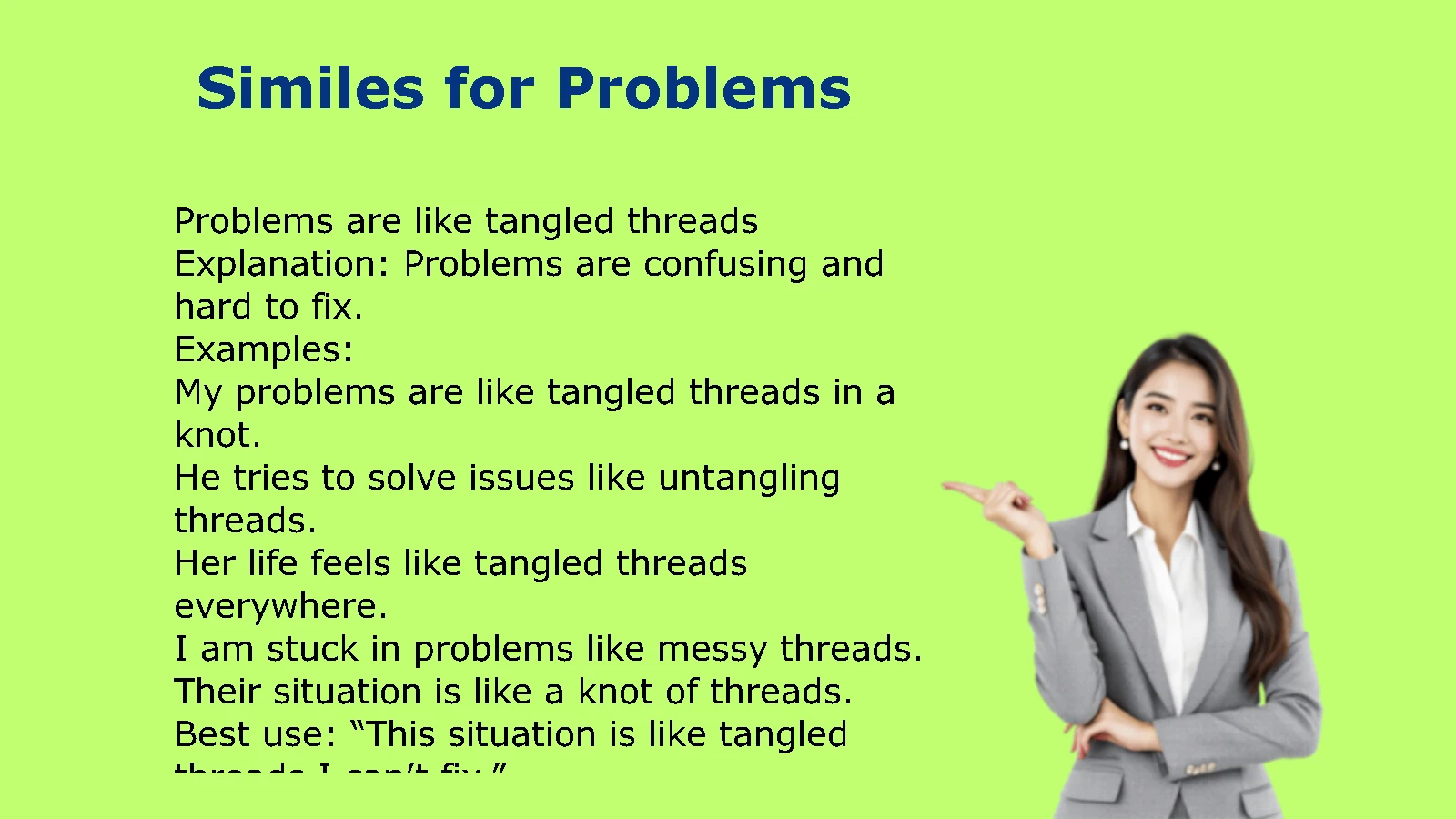
3. Problems are like tangled threads
- Explanation: Problems are confusing and hard to fix.
- Examples:
- My problems are like tangled threads in a knot.
- He tries to solve issues like untangling threads.
- Her life feels like tangled threads everywhere.
- I am stuck in problems like messy threads.
- Their situation is like a knot of threads.
- Best use: “This situation is like tangled threads I can’t fix.”
4. Problems are like a deep ocean
- Explanation: Problems feel endless and overwhelming.
- Examples:
- My problems are like a deep ocean with no end.
- He is drowning in problems like the sea.
- Her worries are like deep water.
- I feel lost, like swimming in an ocean of problems.
- Their stress is like endless waves.
- Best use: “I am drowning in an ocean of problems.”
Related Post: Similes for Difficult Examples
5. Problems are like a broken bridge
- Explanation: Problems stop progress and create barriers.
- Examples:
- My problems are like a broken bridge in my path.
- He cannot move forward as a broken bridge blocks him.
- Her dreams feel like a broken bridge.
- I face gaps like a broken bridge.
- Their situation is like an incomplete bridge.
- Best use: “This problem is like a broken bridge in my way.”
6. Problems are like a locked door
- Explanation: Problems block access to solutions.
- Examples:
- My problems are like a locked door I can’t open.
- He stands in front of problems like a locked door.
- Her opportunities feel like locked doors.
- I try solutions like opening locked doors.
- Their progress is blocked like a locked door.
- Best use: “It feels like a locked door I cannot open.”
7. Problems are like a thick fog
- Explanation: Problems reduce clarity and understanding.
- Examples:
- My problems are like thick fog in my mind.
- He walks through life like foggy weather.
- Her confusion is like thick fog.
- I cannot see solutions like fog blocks vision.
- Their path is like fog-covered roads.
- Best use: “Everything feels like thick fog right now.”
8. Problems are like a burning fire
- Explanation: Problems cause stress and urgency.
- Examples:
- My problems are like a burning fire in my chest.
- He feels pressure like fire spreading.
- Her worries are like flames growing.
- I face problems like fire.
- Their stress burns like fire inside.
- Best use: “This situation feels like a burning fire.”
9. Problems are like sharp stones
- Explanation: Problems cause pain and discomfort.
- Examples:
- My problems are like sharp stones on my path.
- He walks through life like stepping on stones.
- Her challenges feel like sharp rocks.
- I face problems like painful stones.
- Their journey is like walking on stones.
- Best use: “Life feels like sharp stones everywhere.”
10. Problems are like a stormy sky
- Explanation: Problems create emotional instability.
- Examples:
- My problems are like a stormy sky above me.
- He feels unstable like storm clouds.
- Her mood is like stormy weather.
- I live under a stormy sky of problems.
- Their life feels like dark clouds.
- Best use: “Everything looks like a stormy sky today.”
11. Problems are like a maze
- Explanation: Problems are confusing and hard to find a way out of.
- Examples:
- My problems are like a maze with no exit.
- He feels stuck like walking in a maze.
- Her situation is like a confusing maze.
- I search for answers like finding a path in a maze.
- Their life feels like a never-ending maze.
- Best use: “I am trapped in a maze of problems.”
12. Problems are like chains
- Explanation: Problems restrict freedom and progress.
- Examples:
- My problems are like chains holding me down.
- He feels tied like heavy chains.
- Her worries are like invisible chains.
- I move slowly like chained feet.
- Their life feels like chains around progress.
- Best use: “These problems feel like chains on my life.”
13. Problems are like a sinking boat
- Explanation: Problems create fear of failure and collapse.
- Examples:
- My problems are like a sinking boat in the sea.
- He feels lost like a sinking ship.
- Her life is like a boat filling with water.
- I struggle to stay afloat in a sinking boat.
- Their situation feels like sinking deeper every day.
- Best use: “I feel like a sinking boat in trouble.”
14. Problems are like a cracked wall
- Explanation: Problems show weakness and instability.
- Examples:
- My problems are like a cracked wall ready to fall.
- He looks broken like a cracked wall.
- Her confidence is like a damaged wall.
- I feel unstable like a wall with cracks.
- Their relationship is like a cracked wall.
- Best use: “My life feels like a cracked wall.”
15. Problems are like a wild jungle
- Explanation: Problems are complex and hard to navigate.
- Examples:
- My problems are like a wild jungle with no path.
- He walks through life like a jungle.
- Her situation is like dense jungle confusion.
- I feel lost like inside a wild jungle.
- Their journey is like an untamed jungle.
- Best use: “This problem feels like a wild jungle.”
16. Problems are like a broken machine
- Explanation: Problems stop things from working properly.
- Examples:
- My problems are like a broken machine.
- He feels useless like a damaged machine.
- Her plans are like broken machinery.
- I stop working like a broken machine.
- Their system is like faulty equipment.
- Best use: “Everything feels like a broken machine.”
17. Problems are like endless stairs
- Explanation: Problems feel never-ending and tiring.
- Examples:
- My problems are like endless stairs to climb.
- He feels tired, like climbing forever.
- Her struggles are like stairs with no top.
- I keep moving, like climbing endless steps.
- Their effort feels like never-ending stairs.
- Best use: “Life feels like endless stairs of problems.”
18. Problems are like a burning house
- Explanation: Problems create urgency and chaos.
- Examples:
- My problems are like a burning house.
- He feels panic like fire everywhere.
- Her life is like flames rising fast.
- I rush like escaping a burning house.
- Their situation feels like chaos.
- Best use: “Everything feels like a burning house.”
19. Problems are like heavy chains on the feet
- Explanation: Problems slow down progress.
- Examples:
- My problems are like heavy chains on my feet.
- He walks slowly like chained feet.
- Her progress is like dragging chains.
- I move forward as if carrying weight.
- Their journey feels restricted.
- Best use: “I feel like chains are tied to my feet.”
20. Problems are like cracked glass
- Explanation: Problems show emotional damage.
- Examples:
- My problems are like cracked glass.
- He looks fragile like broken glass.
- Her heart is like cracked glass.
- I feel sensitive like shattered glass.
- Their trust feels damaged.
- Best use: “My emotions feel like cracked glass.”
21. Problems are like a flooded road
- Explanation: Problems block progress and movement.
- Examples:
- My problems are like a flooded road.
- He cannot move like blocked streets.
- Her journey is like water everywhere.
- I stop like roads covered in water.
- Their plans are delayed.
- Best use: “My path feels like a flooded road.”
22. Problems are like a blocked tunnel
- Explanation: Problems stop progress completely.
- Examples:
- My problems are like a blocked tunnel.
- He sees no way forward.
- Her dreams feel stuck.
- I cannot pass like blocked passage.
- Their path is closed.
- Best use: “This feels like a blocked tunnel.”
23. Problems are like a broken compass
- Explanation: Problems cause confusion in direction.
- Examples:
- My problems are like a broken compass.
- He doesn’t know where to go.
- Her life feels directionless.
- I feel lost without guidance.
- Their plans have no direction.
- Best use: “Life feels like a broken compass.”
24. Problems are like a silent earthquake
- Explanation: Problems shake life unexpectedly.
- Examples:
- My problems are like a silent earthquake.
- He feels sudden emotional shock.
- Her world shakes quietly.
- I feel unstable inside.
- Their life changes suddenly.
- Best use: “Everything feels like a silent earthquake.”
25. Problems are like a heavy backpack
- Explanation: Problems feel like emotional burden.
- Examples:
- My problems are like a heavy backpack.
- He carries stress daily.
- Her worries feel heavy.
- I walk with burden.
- Their life feels overloaded.
- Best use: “I carry problems like a heavy backpack.”
26. Problems are like a thorny bush
- Explanation: Problems cause pain at every step.
- Examples:
- My problems are like a thorny bush.
- He gets hurt repeatedly.
- Her journey is painful.
- I struggle through difficulties.
- Their path is uncomfortable.
- Best use: “Life feels like a thorny bush.”
27. Problems are like a leaking roof
- Explanation: Problems keep getting worse slowly.
- Examples:
- My problems are like a leaking roof.
- He cannot fix issues easily.
- Her life keeps getting messy.
- I deal with constant stress.
- Their situation worsens slowly.
- Best use: “My life feels like a leaking roof.”
28. Problems are like a frozen road
- Explanation: Problems stop progress completely.
- Examples:
- My problems are like a frozen road.
- He cannot move forward.
- Her plans are stuck.
- I feel blocked.
- Their progress is frozen.
- Best use: “Everything feels like a frozen road.”
29. Problems are like a broken clock
- Explanation: Problems affect timing and progress.
- Examples:
- My problems are like a broken clock.
- He loses track of time.
- Her schedule is disturbed.
- I feel delayed.
- Their progress stops.
- Best use: “Life feels like a broken clock.”
30. Problems are like dark clouds
- Explanation: Problems bring sadness and stress.
- Examples:
- My problems are like dark clouds above me.
- He feels sad and worried.
- Her mood is low.
- I feel emotional pressure.
- Their life feels heavy.
- Best use: “Dark clouds of problems are over me.”
31. Problems are like a collapsing bridge
- Explanation: Problems make future uncertain.
- Examples:
- My problems are like a collapsing bridge.
- He feels unsafe moving forward.
- Her future feels weak.
- I hesitate to continue.
- Their path is unstable.
- Best use: “My future feels like a collapsing bridge.”
32. Problems are like a noisy crowd
- Explanation: Problems create mental confusion.
- Examples:
- My problems are like a noisy crowd in my mind.
- He cannot think clearly.
- Her thoughts are chaotic.
- I feel overwhelmed.
- Their mind is disturbed.
- Best use: “My thoughts feel like a noisy crowd.”
33. Problems are like a sharp wind
- Explanation: Problems cause emotional discomfort.
- Examples:
- My problems are like a sharp wind hitting me.
- He feels emotional pain.
- Her heart feels cold.
- I struggle with stress.
- Their situation feels harsh.
- Best use: “Life hits me like a sharp wind.”
34. Problems are like a closed book
- Explanation: Problems are hard to understand.
- Examples:
- My problems are like a closed book.
- He cannot understand situations.
- Her answers are unclear.
- I feel confused.
- Their story is hidden.
- Best use: “This feels like a closed book.”
35. Problems are like a burning candle
- Explanation: Problems slowly drain energy.
- Examples:
- My problems are like a burning candle.
- He feels weak over time.
- Her energy decreases.
- I feel tired.
- Their strength fades.
- Best use: “I feel like a burning candle.”
36. Problems are like a broken ladder
- Explanation: Problems stop success.
- Examples:
- My problems are like a broken ladder.
- He cannot climb success.
- Her dreams are blocked.
- I struggle to move up.
- Their goals are unreachable.
- Best use: “Success feels like a broken ladder.”
37. Problems are like heavy rain
- Explanation: Problems overwhelm daily life.
- Examples:
- My problems are like heavy rain.
- He feels drenched in stress.
- Her life is disturbed.
- I cannot escape issues.
- Their days feel heavy.
- Best use: “Life feels like heavy rain.”
38. Problems are like a locked treasure chest
- Explanation: Solutions are hard to access.
- Examples:
- My problems are like a locked treasure chest.
- He cannot find answers.
- Her solutions are hidden.
- I struggle to solve things.
- Their success is blocked.
- Best use: “Solutions feel like a locked chest.”
39. Problems are like a shattered mirror
- Explanation: Problems break confidence and self-image.
- Examples:
- My problems are like a shattered mirror.
- He feels broken inside.
- Her confidence is low.
- I see flaws everywhere.
- Their self-image is damaged.
- Best use: “My confidence feels like a shattered mirror.”
40. Problems are like a dark cave
- Explanation: Problems create fear and uncertainty.
- Examples:
- My problems are like a dark cave.
- He feels lost and scared.
- Her life is unclear.
- I search for light.
- Their path is hidden.
- Best use: “I feel trapped in a dark cave.”
41. Problems are like tangled wires
- Explanation: Problems are complex and confusing.
- Examples:
- My problems are like tangled wires.
- He cannot fix issues.
- Her thoughts are messy.
- I feel confused.
- Their situation is complicated.
- Best use: “My thoughts feel like tangled wires.”
42. Problems are like a falling tower
- Explanation: Problems create instability.
- Examples:
- My problems are like a falling tower.
- He feels everything collapsing.
- Her life is unstable.
- I fear failure.
- Their structure is weak.
- Best use: “Everything feels like a falling tower.”
43. Problems are like a stormy sea
- Explanation: Problems bring emotional ups and downs.
- Examples:
- My problems are like a stormy sea.
- He feels emotional waves.
- Her life is unstable.
- I struggle with feelings.
- Their situation is rough.
- Best use: “Life feels like a stormy sea.”
44. Problems are like a broken path
- Explanation: Problems stop smooth progress.
- Examples:
- My problems are like a broken path.
- He cannot move forward easily.
- Her journey is interrupted.
- I face obstacles.
- Their road is unclear.
- Best use: “My journey feels like a broken path.”
45. Problems are like a heavy chain around the heart
- Explanation: Problems cause deep emotional pain.
- Examples:
- My problems are like a heavy chain around my heart.
- He feels an emotional burden.
- Her heart is hurting.
- I feel sadness deeply.
- Their emotions are heavy.
- Best use: “My heart feels chained with problems.”
Conclusion
To sum up, similes for problems add depth and creativity to language by turning abstract difficulties into clear mental images. Instead of directly stating that something is hard or complicated, writers can use comparisons that readers instantly relate to, making the message more engaging and easier to understand. This approach not only improves clarity but also enhances emotional expression in writing, allowing readers to feel the weight, intensity, or frustration of a situation more strongly.
From academic essays to creative storytelling, similes play an important role in shaping vivid and memorable descriptions. For example, a problem can be compared to a tangled web, a heavy storm, or a locked door without a key.
Moreover, learning and using similes effectively strengthens a writer’s vocabulary and communication skills. It encourages more imaginative thinking and helps avoid repetitive or flat descriptions. Ultimately, mastering similes for problems allows writers to communicate challenges in a more meaningful, engaging, and memorable way that leaves a lasting impression on readers.