The sugar-bush meaning most commonly refers to a stand of sugar maple trees tapped for their sap, which people boil down to produce maple syrup. In some regions, however, the term can describe particular shrubs or other plants known by the same common name. Related terms such as sugar maple grove, maple grove, sugarbush, maple syrup, and sap collection are connected to the phrase but can have slightly different meanings.
A sugar bush can refer to a group of sugar-producing maple trees, a place where people collect sap to make maple syrup, or a type of shrub or flowering plant, depending on the region and context. If you’ve come across the phrase “sugar-bush” and wondered what it means, how it is used, or why it has different meanings, the term is closely connected to maple trees, maple syrup, sap collection, woodland areas, native plants, and traditional food production.
In this guide, you’ll learn what “sugar-bush” means, how the phrase is used in sentences, where the term comes from, and how its meaning differs depending on the context. You’ll also see clear examples to help you understand the term and use it naturally and correctly.
By the end, you’ll know exactly what sugar-bush means and how to recognize its different uses.
What Does Sugar-Bush Mean?
A sugar bush is a wooded area or grove containing sugar maple trees that people tap to collect sap for making maple syrup or maple sugar. The term is especially common in Canada and the northeastern United States, where maple sugaring has a long history. In botanical contexts, sugarbush can also name certain shrubs and flowering plants.
The meaning becomes clearer when you look at how people use the term. A farmer might manage a sugar bush to produce maple syrup, while a botanist might use sugarbush as the common name of a particular plant.
The spelling varies, too. You may see sugar bush, sugarbush, or sugar-bush. These forms can refer to the same general concept, although a specific botanical name or publication may favor one spelling.
Sugar-Bush Definition in Simple English
In simple English, a sugar bush is a group of trees that people use to collect sap and make maple syrup.
Think of it as a natural maple-syrup source. Instead of growing sugarcane or harvesting sugar beets, producers tap suitable maple trees and collect the sugary liquid that flows from them during the right season.
For example:
- A family owns a sugar bush and makes maple syrup every spring.
- Workers visit the sugar bush to check their sap-collection equipment.
- A school takes students to a nearby sugar bush to learn how maple syrup is made.
In each example, the term refers to a place rather than a sweetener or a production method.
A sugar bush does not need to be a perfectly organized plantation. It can be a managed woodland with naturally growing maple trees. Some producers maintain access paths, install tubing, and monitor tree health to support long-term sap production.
Sugar-Bush Meaning in Different Contexts
Although maple production is the most familiar meaning in North American usage, the term has more than one interpretation.
| Context | Meaning of sugar bush | Example |
| Maple syrup production | A grove or woodland of sugar maple trees used for sap collection | The producer tapped trees throughout the sugar bush. |
| Forestry and land management | A woodland managed for maple sap or related purposes | The family improved access to its sugar bush. |
| Southwestern U.S. botany | A common name for Rhus ovata, an evergreen shrub | Sugarbush grows in dry, rocky environments. |
| Southern African botany | A common name used for certain Protea plants | The sugarbush displayed large, distinctive flower heads. |
These meanings share a name, but they do not describe the same thing. A maple-producing sugar bush is an area of woodland, whereas a botanical sugarbush may be an individual plant or a type of flowering shrub.
The key to understanding the term is context. Words such as sap, maple, and syrup usually point to the woodland meaning. Words such as shrub, flowers, and native habitat usually indicate a botanical meaning.
Sugar-Bush Origin and Etymology
The term sugar bush combines two familiar English words: sugar, referring to the sweet substance obtained from maple sap, and bush, which can refer to vegetation or a wooded area. Together, the words describe a place associated with producing sugar from trees.
The term has been recorded in English since around the turn of the nineteenth century, reflecting the established practice of collecting maple sap in North America. Its meaning developed alongside regional maple-sugaring traditions.
Why Is It Called a Sugar Bush?
The name comes from the relationship between maple trees and sugar production. Sugar maple sap contains dissolved sugars, primarily sucrose, that producers concentrate by removing water.
The word bush does not necessarily mean a small, low-growing shrub. In this expression, it refers to a tract of woodland or a group of trees.
The name therefore describes the woodland’s purpose rather than the physical appearance of a single tree.
Consider how the term works in practice:
- Trees grow in the woodland. Sugar maples establish a stand that can support seasonal sap collection.
- Producers tap suitable trees. They make small, carefully placed openings and install collection equipment.
- Sap flows under suitable conditions. Seasonal temperature changes help create the conditions needed for sap collection.
- Producers collect the sap. They transport it to a processing facility.
- They concentrate the sap. Boiling removes water and produces maple syrup. Further processing can produce maple sugar.
The woodland earns the name sugar bush because it supplies the raw material for these products.
Is Sugar Bush an Old or Regional Term?
Yes. The term has historical roots in North American maple production and remains particularly recognizable in Canada and the northeastern United States.
Maple sugaring became part of rural life because local communities could produce a sweetener from trees already growing in their environment. Families and small producers developed seasonal routines around the spring sap flow.
The term also reflects a different relationship with the land than commercial sugarcane production. A sugar bush can remain a living woodland for decades when producers manage it carefully, protect its trees, and maintain the surrounding ecosystem.
Regional language varies. One community might call its maple-producing woodland a sugar bush, while another might simply call it a maple grove or sugarbush.
These expressions overlap, but they do not always carry exactly the same regional or practical associations.
How to Pronounce Sugar-Bush
The word sugar bush has two syllables, with the main stress on the first syllable of sugar. In standard American English, it is pronounced approximately “SHUUG-er-buush.”
The first part sounds like the word sugar, and the second part sounds like bush. You can pronounce the expression naturally by saying the two words together without inserting a noticeable pause.
Sugar Bush vs. Sugarbush: Which Spelling Is Correct?
Both sugar bush and sugarbush are used in English. The hyphenated form, sugar-bush, also appears, though it is less necessary in ordinary writing.
The difference is mainly a matter of spelling convention rather than meaning.
| Form | Type | Typical use |
| Sugar bush | Open compound | General prose and descriptive writing |
| Sugarbush | Closed compound | Regional usage, botanical common names, and some publications |
| Sugar-bush | Hyphenated compound | Occasional usage or a publication’s preferred style |
For example, you could write:
- “We visited a sugar bush in Vermont.”
- “The sugarbush produces enough sap for several batches of syrup.”
- “The guide explained the history of the sugar-bush tradition.”
All three sentences communicate the same general woodland meaning.
Which form should you choose? Use sugar bush when writing a general explanatory article unless your chosen dictionary, publication, or subject-specific source consistently uses another form. When discussing a botanical species, follow the established spelling used for that plant.
For SEO purposes, you can naturally include the variations throughout an article. However, you don’t need separate pages for each spelling when they express the same search intent.
Is Sugar-Bush a Noun?
Yes. Sugar bush is a noun when it refers to a maple-producing woodland or a plant known by that common name.
It typically functions as a countable noun in the woodland sense. You can refer to a sugar bush, the sugar bush, or several sugar bushes.
Here are a few examples:
- “Our neighbors own a sugar bush near the river.”
- “The sugar bush needs careful management to remain productive.”
- “Several sugar bushes operate as seasonal tourist attractions.”
- “The gardener planted a sugarbush shrub along the dry hillside.”
Notice the difference in the last sentence. The word identifies an individual plant rather than a grove of trees.
A useful writing tip is to provide a clue about the meaning when you first introduce the term. A phrase such as maple-producing sugar bush or sugarbush shrub removes ambiguity without requiring a lengthy explanation.
What Is a Sugar Bush Used For?
A sugar bush is primarily used to produce maple sap for making maple syrup and maple sugar. Producers select suitable trees, collect sap during the seasonal flow, and process it into concentrated sweeteners. A well-managed woodland can continue producing sap over many years while supporting wildlife and other woodland functions.
However, sap production involves more than placing buckets on trees. Producers must understand seasonal conditions, tree health, collection equipment, and the economics of processing a large volume of liquid.
Collecting Sap From Sugar Maple Trees
The sugar maple, Acer saccharum, is particularly valued for maple syrup production because its sap contains sugar and can produce high-quality syrup.
Sap collection typically takes place in late winter or early spring, although the exact season depends on local weather and geography. In many regions, producers look for conditions in which temperatures rise above freezing during the day and fall below freezing at night.
These temperature changes help create the conditions that allow sap to flow from tapped trees.
The process usually involves several steps:
- Selecting trees: Producers identify healthy, mature maples suitable for tapping.
- Installing taps: They create small openings and insert spouts or tubing.
- Collecting sap: Buckets or a tubing network carry the sap to collection tanks.
- Monitoring tree health: Producers avoid excessive tapping and follow appropriate practices for the size and condition of each tree.
A sugar bush may use traditional buckets or a modern vacuum-assisted tubing system. The choice depends on the woodland’s size, terrain, available equipment, and production goals.
A small family operation might collect sap in buckets and process it over a wood-fired evaporator. A larger commercial producer might use extensive tubing, storage tanks, and efficient evaporation equipment.
Both operations depend on the same basic resource: healthy maple trees.
Turning Maple Sap Into Syrup
Fresh maple sap is mostly water. Producers must remove a substantial amount of that water before the liquid becomes syrup.
Pure maple syrup typically reaches about 66% sugar content by weight, measured using an appropriate instrument. The exact processing endpoint matters because syrup that contains too much water may not store safely, while excessive concentration can encourage sugar crystals to form.
The production process generally follows this sequence:
- Producers collect fresh sap from the sugar bush.
- They transport the sap to a processing area, often called a sugarhouse or sugar shack.
- They heat the sap in an evaporator to remove water.
- They monitor the concentration and temperature as the liquid thickens.
- They filter and package the finished syrup using suitable food-handling practices.
Maple sugar requires further concentration and processing beyond ordinary syrup production.
One important distinction: the sugar bush supplies the sap, but the sugarhouse processes it. These are related parts of the same operation, yet they refer to different places.
The Role of Sugar Bushes in Local Traditions
Sugar bushes have cultural importance beyond the production of a sweetener. In maple-producing regions, the arrival of sap season often signals the transition from winter to spring.
Some farms invite visitors to watch sap collection, learn about evaporation, and taste freshly produced maple syrup. Schools may organize educational trips, while communities hold seasonal festivals featuring maple products.
Maple sugaring also has deep Indigenous histories. Indigenous peoples in northeastern North America developed and practiced methods for collecting and processing maple sap long before the industry became a commercial enterprise. Their knowledge and traditions are diverse, so it is more accurate to recognize distinct communities and practices than to treat them as one uniform tradition.
Today, sugar bushes can serve several purposes at once:
- Producing maple syrup and maple sugar.
- Maintaining managed woodland.
- Supporting educational visits and agritourism.
- Preserving family and community traditions.
- Providing habitat for birds, insects, and other wildlife.
The woodland’s long-term value depends on responsible management. Soil protection, tree regeneration, and a healthy mix of vegetation all contribute to a resilient sugar bush.
Other Meanings of Sugarbush in Botany
Outside maple production, sugarbush can refer to certain plants, including Rhus ovata in the southwestern United States and some Protea species in southern Africa. These meanings are botanical rather than agricultural descriptions of a maple-producing woodland.
The shared common name can confuse readers because the plants do not all belong to the same genus or grow in the same region. Identifying the location and plant characteristics usually resolves the confusion.
Sugarbush as Rhus ovata
Botanical name: Rhus ovata
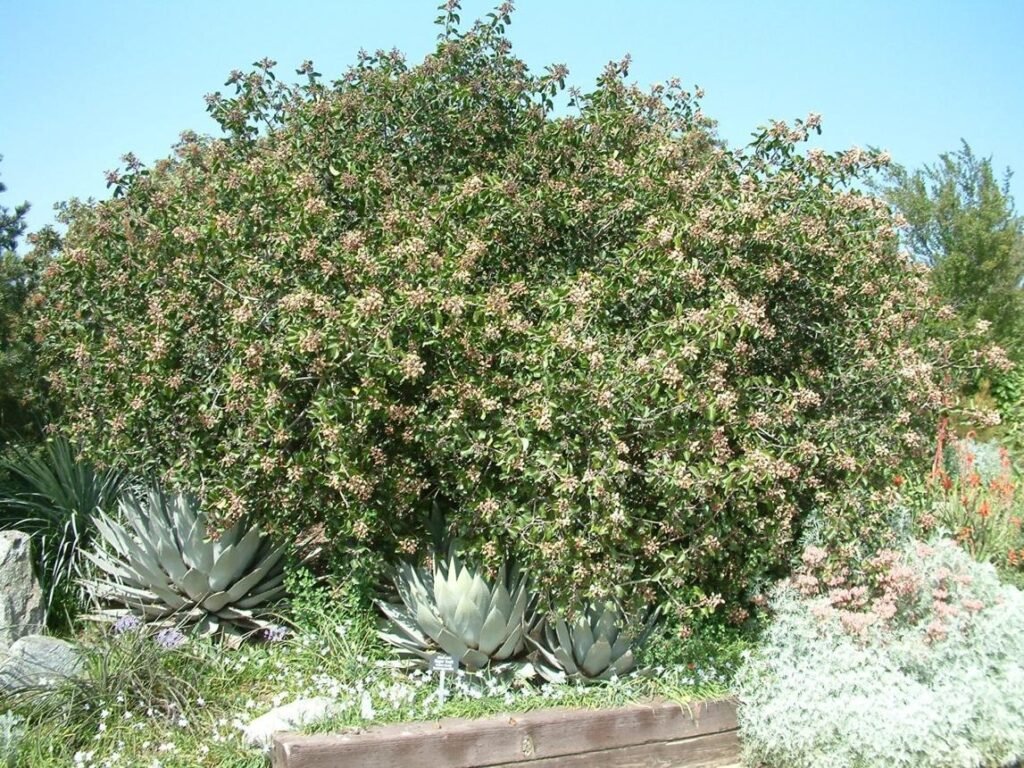
Rhus ovata is an evergreen shrub native to the southwestern United States, particularly California and Arizona. It belongs to the sumac family, Anacardiaceae, and commonly grows in dry, rocky habitats and chaparral communities.
The shrub has several recognizable characteristics:
- Evergreen foliage: Its thick, leathery leaves remain on the plant throughout the year.
- Small flowers: It produces clusters of relatively small flowers.
- Reddish fruit: Its fruit develops a reddish appearance as it matures.
- Drought adaptation: It can tolerate dry conditions once established in a suitable environment.
Despite its common name, Rhus ovata is not a sugar maple and is not the tree traditionally tapped for North American maple syrup.
The distinction matters when reading gardening guides. If an article discusses drought-tolerant landscaping, chaparral habitats, or native California plants, sugarbush probably refers to Rhus ovata rather than a maple-producing woodland.
Gardeners considering this species should also account for its mature size, local climate, drainage, and available space. A plant that thrives in a dry native habitat may struggle in poorly drained soil or a climate with very different growing conditions.
Sugarbush as a South African Protea
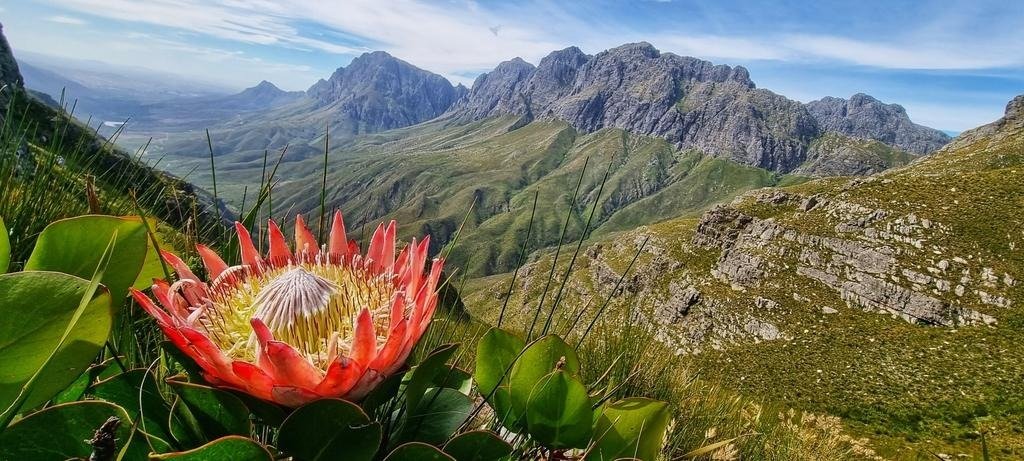
In southern Africa, sugarbush is a common name associated with certain flowering plants in the genus Protea. These plants belong to the family Proteaceae and are well known for their distinctive flower heads and ecological role in the region’s fynbos vegetation.
Depending on the species, a protea may feature:
- Large, showy flower heads surrounded by colorful bracts.
- Woody stems and leaves adapted to local growing conditions.
- Growth forms ranging from shrubs to larger, more substantial plants.
- Relationships with pollinators, including birds and insects.
The word sugarbush in this context has nothing to do with collecting maple sap. It identifies a flowering plant or a group of related plants by a regional common name.
Proteas are also important in horticulture and the cut-flower trade. Their unusual forms and long-lasting flowers make them popular ornamental plants, although their growing requirements vary by species.
For someone researching a South African garden or wildflower, the botanical context is essential. A reference to flower heads, fynbos, or Cape-region vegetation points toward a protea rather than a North American maple grove.
How to Tell Which Sugarbush Meaning Applies
The easiest way to distinguish the meanings is to examine the subject of the sentence, the geographical setting, and the words surrounding sugarbush.
| Clue | Likely meaning | What to look for |
| Maple sap or syrup | Maple-producing sugar bush | Tapped trees, collection buckets, boiling sap |
| A woodland or farm | Maple-producing sugar bush | Groves, trails, seasonal harvesting |
| California or Arizona | Rhus ovata | Evergreen leaves, chaparral, dry habitats |
| South Africa or fynbos | A Protea plant | Flower heads, ornamental shrubs, native flora |
| A garden or landscaping guide | Botanical sugarbush | Planting, soil, watering, mature size |
Context is more reliable than the word alone. If the term appears in a sentence without enough detail, check the broader paragraph or the source’s subject. That usually reveals which meaning the writer intended.
Sugar-Bush Examples in Sentences
The best way to understand a word is to see how people use it. The following original examples show how sugar bush and sugarbush work in everyday writing, educational material, and botanical descriptions.
Sugar Bush Examples Related to Maple Syrup
These sentences use the term to describe a maple-producing woodland.
- “The family visited its sugar bush when the first warm days of spring arrived.”
- “A network of blue tubing carried sap from the sugar bush to the collection tank.”
- “The farmer planted young maple trees to maintain the sugar bush for future generations.”
- “Visitors walked along the woodland trail while workers gathered fresh sap.”
- “The local school organized a trip to a sugar bush to teach students about maple syrup production.”
- “After several years of careful management, the woodland became a reliable source of maple sap.”
Each example emphasizes a different aspect of the term: seasonal activity, equipment, woodland management, tourism, education, or long-term production.
Sugarbush Examples Related to Plants
In botanical writing, sugarbush can refer to an individual shrub or flowering plant.
- “The sugarbush shrub grew along the dry, rocky hillside.”
- “The gardener selected Rhus ovata for a drought-tolerant native planting.”
- “A flowering sugarbush added color to the South African garden.”
- “The botanist recorded the sugarbush’s habitat and flowering period.”
- “The landscape designer grouped several native shrubs along the property boundary.”
These examples show why context matters. The first two sentences suggest a southwestern U.S. shrub, while the third may refer to a South African protea.
How to Use Sugar Bush in Everyday Writing
Use the term when you want to describe a maple-producing woodland or a plant with that common name. If your audience may not recognize the expression, explain it the first time it appears.
For instance, instead of writing:
“The sugar bush was productive this year.”
You could write:
“The maple-producing sugar bush yielded plenty of sap during the spring harvest.”
The second sentence gives readers more information. It identifies the type of sugar bush and explains what made the season successful.
When discussing plants, a scientific name can remove any doubt:
“The Rhus ovata sugarbush thrives in suitable dry, southwestern habitats.”
This approach works particularly well in educational articles, gardening guides, and technical writing.
Sugar Bush vs. Similar Words
Several terms appear alongside sugar bush, but they don’t mean the same thing. Understanding the distinctions helps you choose the right word when discussing maple production.
Sugar Bush vs. Sugar Maple
A sugar maple is a tree species, while a sugar bush is a grove or woodland associated with sap collection.
The sugar maple’s scientific name is Acer saccharum. Producers value the species for its sap, which they process into maple syrup and related products.
For example:
- “The sugar maple stood beside the old stone wall.” This sentence describes one tree.
- “The family maintained a sugar bush behind the farmhouse.” This sentence describes a wooded area.
A sugar bush may contain many sugar maples, but the terms are not interchangeable. One names the tree; the other names the place.
Sugar Bush vs. Sugar Shack
A sugar bush is the woodland where producers collect sap. A sugar shack is a building used to process that sap into maple syrup.
Some operations use the term sugarhouse for the processing building. The exact terminology can vary by region.
| Feature | Sugar bush | Sugar shack |
| What it is | A grove or woodland | A building or processing facility |
| Main purpose | Growing trees and supplying sap | Processing sap into maple syrup |
| Typical activities | Tapping trees, collecting sap | Heating sap, concentrating syrup |
| Common setting | Maple-producing woodland | Farm or processing area |
| Example | “We tapped trees in the sugar bush.” | “We boiled the sap in the sugar shack.” |
A producer may own both a sugar bush and a sugar shack. They form parts of one production system, but each has a separate role.
Sugar Bush vs. Maple Sugaring
Maple sugaring refers to the process of collecting maple sap and making maple products. A sugar bush is the place that supplies the sap.
For example, a family can manage a sugar bush without operating a commercial maple-sugaring business. It may collect sap for personal use or allow another producer to harvest it.
Likewise, someone can learn about maple sugaring by visiting a demonstration site without owning any woodland.
The distinction is straightforward:
- Sugar bush: A place.
- Maple sugaring: An activity or production process.
- Maple syrup: The finished sweetener.
These related terms help describe different stages of the same agricultural tradition.
Frequently Asked Questions About Sugar-Bush Meaning
What Does Sugar-Bush Mean?
Sugar bush most commonly means a grove or woodland of sugar maple trees used to collect sap for making maple syrup and maple sugar. In botanical contexts, sugarbush can also refer to certain shrubs and flowering plants.
Is Sugarbush One Word or Two?
Both sugarbush and sugar bush are used in English. The hyphenated spelling sugar-bush also appears. For general writing, choose one spelling and use it consistently.
What Is Another Name for a Sugar Bush?
Depending on the context, alternatives include maple grove, sugar maple grove, or maple-producing woodland. These expressions describe the North American meaning, although their precise implications may differ. They aren’t interchangeable with the botanical meaning of sugarbush.
Is a Sugar Bush the Same as a Sugar Shack?
No. A sugar bush is the wooded area where producers collect maple sap. A sugar shack is the building where they typically boil and process the sap into maple syrup.
What Plants Are Called Sugarbush?
The name sugarbush applies to certain plants, including Rhus ovata, an evergreen shrub native to the southwestern United States, and certain Protea species in southern Africa. The specific plant depends on the region and context.
Where Does the Term Sugar Bush Come From?
The term combines sugar, referring to the sweetener produced from maple sap, and bush, referring to an area of vegetation or woodland. Its recorded English use dates to around the turn of the nineteenth century.
Conclusion: Understanding the Sugar-Bush Meaning
The sugar-bush meaning most often refers to a grove of sugar maple trees used to collect sap for maple syrup and maple sugar. The term also has botanical meanings, including Rhus ovata in the southwestern United States and certain Protea plants in southern Africa.
To identify the correct meaning, look at the surrounding context. References to sap, syrup, and maple trees indicate the woodland meaning, while discussions of flowers, shrubs, and native habitats usually point to a botanical use.
Remember these three distinctions:
- A sugar bush is a maple-producing woodland.
- A sugar maple is a tree species.
- A sugar shack is a building used to process sap.
Keep these differences in mind when you encounter the term in a dictionary, gardening guide, or article about maple production. If you’re researching a particular plant, look for its scientific name to identify it accurately.













