Trachyte meaning refers to a light-colored, alkali-feldspar-rich igneous volcanic rock that forms when magma cools at or near Earth’s surface. Geologists identify trachyte by its mineral composition, silica and alkali content, and characteristic textures, which can include aligned feldspar crystals. Understanding trachyte also means knowing how it forms, where it occurs, how people use it, and how it differs from related rocks such as rhyolite, andesite, basalt, and syenite.
The word trachyte comes from the Greek trachys, meaning “rough,” a reference to the rock’s traditionally described surface texture. Although many samples appear gray, pinkish, tan, or pale brown, their exact color depends on mineral content, weathering, and the conditions under which they formed.
Trachyte belongs to the broader family of extrusive igneous rocks. Its chemistry is typically rich in sodium and potassium relative to silica, while its mineral makeup is dominated by alkali feldspar. These features help geologists distinguish it from other volcanic rocks and understand the processes that shaped a volcanic region.
What Is Trachyte? Definition and Etymology
Trachyte is an extrusive igneous rock composed mainly of alkali feldspar and generally characterized by relatively low quartz content. It forms from volcanic magma that cools at or near the Earth’s surface. Depending on cooling conditions and crystal growth, trachyte may have a fine-grained, porphyritic, or visibly aligned crystalline texture.
Trachyte Meaning in Geology
In geology, trachyte describes a particular type of volcanic rock with a characteristic chemical and mineral composition. It typically contains abundant alkali feldspar, a group of minerals that includes potassium-rich and sodium-potassium feldspars.
Trachyte is part of the classification system used to organize igneous rocks according to their mineral content, chemical composition, and texture. Geologists do not identify it solely by its color or roughness.
The defining characteristics of trachyte include:
- Rock type: Extrusive igneous rock.
- Dominant minerals: Usually alkali feldspars.
- Typical appearance: Often light gray, cream, pinkish, or tan.
- Quartz content: Generally low in typical trachyte.
- Formation: Cooling and solidification of volcanic magma.
- Characteristic texture: May show feldspar crystals aligned by the movement of lava.
A rock that looks pale and rough is not necessarily trachyte. A reliable identification considers its mineral assemblage and, when necessary, its chemical composition.
Origin of the Word Trachyte
The name trachyte derives from the Greek word trachys, meaning rough. The term reflects the rock’s characteristic texture, although the surface of a specimen can vary with weathering, polishing, and mineral composition.
The word is useful as a reminder of the rock’s traditional description, but it is not a complete scientific definition. Modern geological classification depends on composition and other diagnostic features rather than touch alone.
What Type of Rock Is Trachyte?
Trachyte is an igneous rock, meaning it forms when molten rock cools and solidifies. More specifically, it is classified as an extrusive or volcanic rock because its magma reaches or approaches the Earth’s surface before cooling.
Igneous rocks fall into two broad groups:
- Extrusive igneous rocks form when lava cools at or near the surface. They commonly develop fine-grained textures because cooling limits crystal growth.
- Intrusive igneous rocks form when magma cools underground. They often develop larger crystals because they cool more slowly.
Trachyte has a close compositional relationship with syenite, a generally coarse-grained intrusive rock. Both can be rich in alkali feldspar, but their textures reflect different cooling environments.
This relationship helps explain why geologists study both rock composition and formation history when classifying igneous materials.
Trachyte Composition and Mineral Content
Trachyte composition is the key to understanding how this volcanic rock differs from other igneous rocks. Its mineral assemblage typically contains abundant alkali feldspar, limited quartz, and smaller amounts of minerals such as plagioclase, biotite, amphibole, or pyroxene. The exact proportions vary from one geological deposit to another.
What Minerals Make Up Trachyte?
The principal mineral in trachyte is usually alkali feldspar, a group of aluminosilicate minerals containing potassium, sodium, or both. These minerals influence the rock’s color, chemical classification, and physical properties.
The main minerals associated with trachyte include:
| Mineral | Role in trachyte | Typical characteristics |
| Sanidine | Common major feldspar | Potassium-rich feldspar that can crystallize in volcanic environments |
| Anorthoclase | Common in some varieties | Sodium-potassium feldspar |
| Plagioclase feldspar | May occur in smaller proportions | Sodium-calcium feldspar |
| Biotite | Accessory or minor mineral | Dark mica containing iron and magnesium |
| Amphibole | May occur in some samples | Dark silicate mineral containing iron, magnesium, and other elements |
| Pyroxene | May occur in some varieties | Silicate mineral associated with several types of igneous magma |
| Quartz | Generally scarce in typical trachyte | Crystalline silica that helps distinguish more silica-rich rocks |
The presence of these minerals depends on the chemistry of the magma and the conditions under which crystals formed.
For example, a specimen containing abundant pale feldspar and a few dark mineral grains may have the typical appearance associated with trachyte. However, a photograph alone usually cannot establish the exact mineral percentages.
Why does feldspar dominate?
Feldspar crystallizes readily in many magmas. When the magma’s chemical composition favors alkali feldspar and relatively little free quartz, the resulting volcanic rock may fall within the trachyte classification.
Geologists examine the minerals together rather than relying on one component. This approach helps distinguish trachyte from other feldspar-bearing rocks.
Chemical Composition and Silica content
Silica content is an important factor in igneous rock classification. Silica, represented by the chemical formula SiO₂, combines with other elements to form many common rock-forming minerals.
Trachyte typically has a silica content broadly around 60–65% by weight, although actual values vary and classification depends on the full chemical composition. Its defining chemical feature is the relationship between silica and total alkalis, which include sodium oxide (Na₂O) and potassium oxide (K₂O).
Geologists often use a Total Alkali-Silica (TAS) diagram to classify volcanic rocks when their chemical composition is known.
The diagram compares:
- Horizontal axis: Silica content.
- Vertical axis: Total sodium oxide and potassium oxide content.
- Classification fields: Different volcanic rock types, including trachyte, rhyolite, and basaltic varieties.
Trachyte occupies a field associated with relatively high total alkalis and an intermediate-to-high silica content. The precise boundary depends on the standardized classification scheme.
This distinction matters because two volcanic rocks can look similar but have different chemical compositions. Conversely, rocks with similar chemistry can develop different textures because they cooled under different conditions.
An important distinction: Silica percentage alone does not determine whether a rock is trachyte. Geologists consider the relationship between silica and total alkalis, and they may use mineralogical information to refine the classification.
Does Trachyte Contain Quartz?
Typical trachyte contains little or no free quartz. Its composition generally favors feldspar rather than the abundant quartz commonly associated with rhyolite.
Quartz content helps distinguish some volcanic rocks, but the distinction requires care. A rock’s formal classification does not depend on a single mineral in isolation, and its chemical composition can be more informative than a simple visual inspection.
Consider these general patterns:
- Trachyte: Typically dominated by alkali feldspar, with little free quartz.
- Rhyolite: Generally silica-rich and commonly contains quartz and feldspar.
- Andesite: Commonly dominated by plagioclase feldspar, with additional minerals depending on its composition.
- Basalt: Generally contains plagioclase and pyroxene, often with olivine, and typically has lower silica content than trachyte.
These are broad patterns rather than rules that identify every specimen. Some rocks require laboratory analysis to classify accurately.
Physical Characteristics and Texture of Trachyte
The physical characteristics of trachyte include its color, grain size, mineral arrangement, density, and resistance to weathering. These properties vary with mineral composition, porosity, cooling history, and alteration. Its characteristic trachytic texture can reveal how crystals became aligned as magma moved.
What Does Trachyte Look Like?
Trachyte is often a light-colored volcanic rock. Common appearances include light gray, pinkish gray, pale brown, cream, and tan.
Its appearance depends on several factors:
- Feldspar content: Abundant pale feldspar often gives the rock a light overall color.
- Dark minerals: Biotite, amphibole, and pyroxene can create darker specks or patches.
- Crystal size: Some samples have crystals too small to identify easily with the naked eye, while others contain prominent crystals.
- Weathering: Exposure to water, air, and changing temperatures can alter the rock’s surface color.
- Porosity: Gas bubbles or other openings can make a specimen appear rougher or lighter.
Some trachyte samples look fairly uniform, while others display visible crystals against a finer-grained background.
A rough or uneven surface may be consistent with the rock’s traditional name, but it does not prove that a sample is trachyte. Basalt, rhyolite, and many other volcanic rocks can also have rough surfaces.
What Is Trachytic Texture?
Trachytic texture is a characteristic arrangement in which elongated feldspar crystals tend to align in a broadly parallel pattern. This alignment commonly develops as crystals grow or become oriented in moving magma or lava.
Imagine small pieces of wood moving through a stream. As the current pushes them along, many pieces tend to point in a similar direction. Feldspar crystals can develop a comparable directional arrangement as magma flows.
Under a microscope, trachytic texture may appear as numerous slender feldspar crystals arranged along a common direction. Geologists can use this pattern to interpret aspects of a rock’s formation.
The texture can reveal clues about:
- The direction of movement in the original lava.
- The orientation of growing crystals.
- The conditions under which the magma crystallized.
- The relationship between the rock’s mineral structure and its volcanic history.
However, not every specimen classified as trachyte displays an obvious trachytic texture. Classification and texture are related but distinct concepts.
Trachyte is a rock classification, while trachytic texture describes a particular arrangement of crystals. This distinction is important when examining hand specimens, thin sections, or geological photographs.
Density, Hardness, and Durability of Trachyte
Trachyte does not have one universal density or hardness value. Its physical properties depend on its mineral composition, crystal structure, porosity, weathering, and any fractures in the rock.
A compact specimen may behave differently from a porous or heavily weathered sample taken from the same deposit.
| Property | What it means for trachyte |
| Density | Depends on the minerals present and the amount of pore space. |
| Hardness | Influenced by its constituent minerals and the strength of the rock’s structure. |
| Porosity | Affects water absorption, apparent density, and potentially durability. |
| Weathering resistance | Depends on mineral stability, fractures, exposure, and local climate. |
| Workability | Influences how easily the rock can be cut, shaped, or finished. |
| Strength | Varies with cracking, alteration, porosity, and the direction of applied stress. |
These properties matter when selecting trachyte for building stone, paving, or aggregate.
For instance, a dense, minimally fractured sample may be suitable for an application that requires a strong stone. A highly weathered or porous sample may perform poorly under repeated freezing, water exposure, or heavy traffic.
Engineers therefore test the actual material rather than assuming that every trachyte deposit has the same performance.
How to Identify Trachyte in a Rock Sample
You can begin identifying a possible trachyte sample by examining its appearance and texture. A definitive identification may require a hand lens, thin-section microscopy, or chemical analysis.
Use this practical checklist:
- Check the color. Look for pale gray, cream, tan, or pinkish tones, while remembering that color is not diagnostic on its own.
- Look for feldspar. Identify pale, blocky, or elongated crystals if they are visible.
- Examine the grain size. Determine whether the rock is fine-grained, porphyritic, or coarser than expected for a typical volcanic specimen.
- Look for aligned crystals. Parallel feldspar crystals may indicate trachytic texture.
- Check for dark minerals. Note any biotite, amphibole, or pyroxene grains.
- Consider the geological setting. A sample collected from a known alkaline volcanic complex may be more likely to belong to an appropriate rock group.
- Confirm the composition. Use mineralogical or chemical testing if visual identification remains uncertain.
A hand specimen can provide useful clues, but visual identification is not always enough. A pale volcanic rock may be trachyte, rhyolite, or another compositionally distinct rock.
How Does Trachyte Form?
Trachyte forms through the cooling and solidification of magma with a chemical composition that favors the formation of alkali-feldspar-rich volcanic rock. Its development involves magma generation, movement through the crust, crystallization, and eruption or emplacement near the Earth’s surface.
Cooling and Crystallization of Volcanic Magma
The formation of trachyte begins with molten rock beneath Earth’s surface. Magma contains a mixture of molten material, dissolved gases, and crystals that may already have formed.
As magma cools, minerals crystallize at different temperatures and under different chemical conditions. This process changes the composition of the remaining melt.
In many volcanic systems, magma evolves through fractional crystallization. Some minerals crystallize and become separated from the remaining liquid, changing the liquid’s chemical composition over time.
For example, if early-forming minerals remove certain elements from the magma, the remaining melt may become relatively enriched in alkalis. Under suitable conditions, this evolving magma can produce trachytic compositions.
The general sequence may involve:
- Magma generation at depth.
- Movement and storage within the Earth’s crust.
- Mineral crystallization and changes in melt composition.
- Eruption or emplacement near the surface.
- Cooling and solidification into volcanic rock.
Not every trachyte deposit forms through exactly the same sequence. Different magmatic processes can produce similar final compositions.
Cooling speed also influences texture. Rapid cooling generally limits crystal growth, while crystals that form before eruption may remain large enough to be visible in the finished rock.
Geological Environments Where Trachyte Forms
Trachyte occurs in several types of volcanic environments, particularly those associated with alkaline magmatism.
These environments can include:
- Continental rift zones: Areas where Earth’s crust stretches and thins.
- Hot-spot volcanic regions: Areas where long-lived volcanic activity may develop above mantle upwellings.
- Volcanic islands: Some island systems produce alkaline magmas that can evolve into trachytic compositions.
- Complex volcanic provinces: Regions where repeated eruptions and magma differentiation create diverse rock types.
The presence of trachyte can help geologists reconstruct the history of a volcanic system. For example, a sequence of basaltic, intermediate, and alkali-rich rocks may preserve evidence of changing magma compositions through time.
However, trachyte is not exclusive to one tectonic environment. Geologists must examine regional structures, other rock types, and geochemical evidence to interpret how a particular deposit formed.
Trachyte and Volcanic Activity
Trachyte can provide clues about the evolution of magma within a volcanic system. Its mineral composition and chemical signature may help researchers determine how magma changed before an eruption.
Some trachytic magmas are relatively viscous compared with basaltic magmas. Their behavior depends on factors such as temperature, dissolved water, crystal content, and chemical composition.
Viscosity influences how magma moves and how volcanic systems behave. Yet the presence of trachyte alone does not establish whether a volcano is active, dormant, or dangerous. Scientists need additional evidence, including seismic activity, gas emissions, ground deformation, and the volcano’s eruption history.
This distinction prevents a common misunderstanding: the name of a volcanic rock tells us about the rock itself, not the present-day condition of the volcano that produced it.
Where Is Trachyte Found?
Trachyte occurs in volcanic regions around the world. Its distribution reflects the geological environments that produce alkali-rich magma. Some deposits occur in ancient volcanic provinces, while others form part of younger volcanic landscapes.
Famous Trachyte Locations Around the World
Several well-known volcanic regions contain trachyte or related alkaline volcanic rocks.
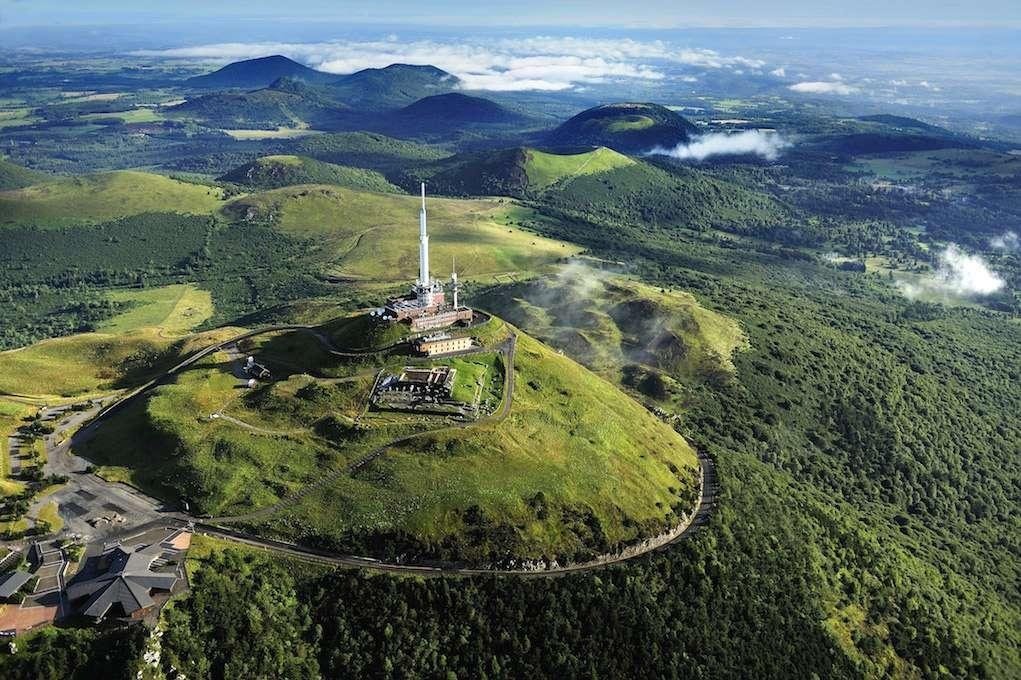
Auvergne, France
The Auvergne region contains an extensive volcanic landscape, including the Chaîne des Puys. Its volcanic history makes it important for studying the diversity of volcanic rocks and the processes that formed them.
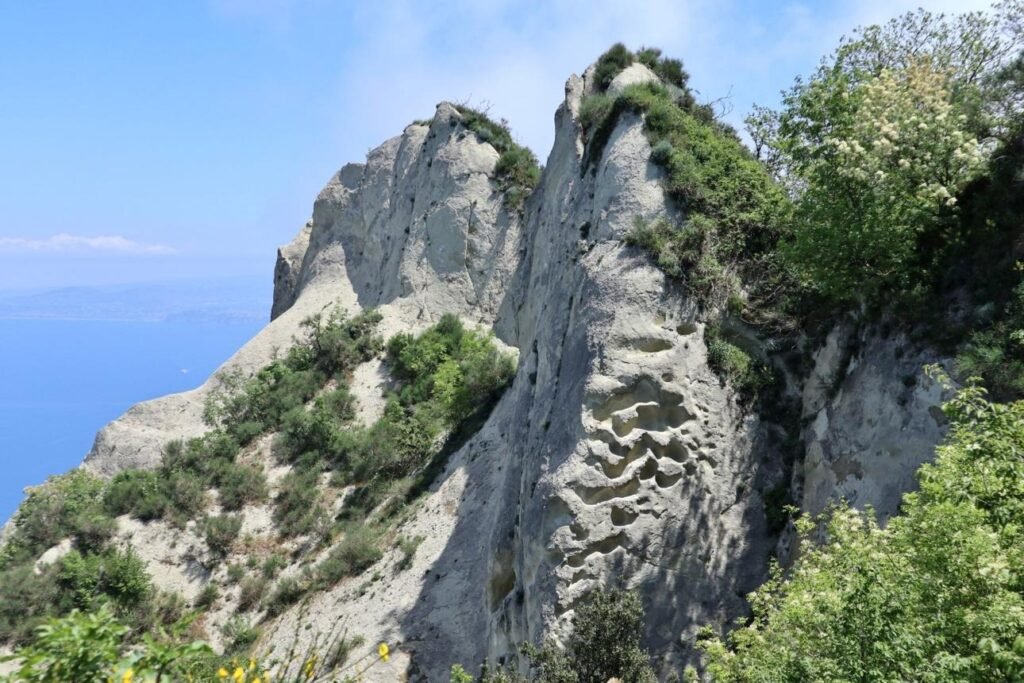
Ischia, Italy
Ischia is a volcanic island in the Bay of Naples. Its volcanic products include evolved, alkali-rich compositions that help researchers investigate how magma changes within a volcanic system.
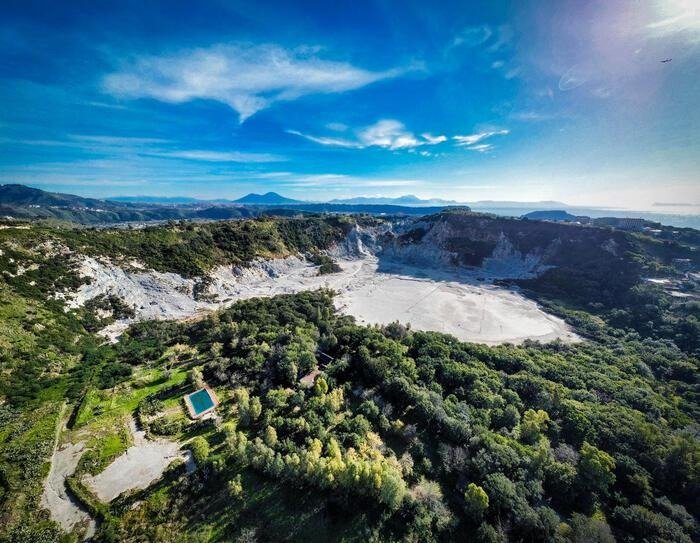
Phlegraean Fields, Italy
This volcanic area near Naples contains a complex history of eruptions and magma evolution. Its diverse volcanic products provide a useful setting for studying variations in igneous rock composition.
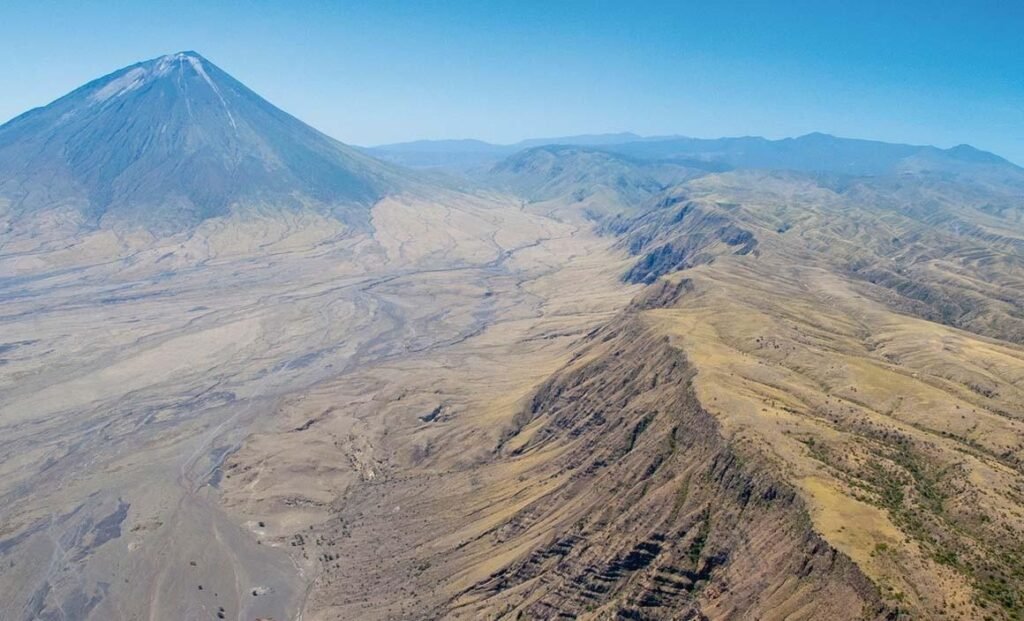
East African Rift
The East African Rift is a major region of continental extension and volcanic activity. Alkaline magmatism occurs in parts of the rift system, although the specific rock types vary by location.
Trachyte and related volcanic rocks also occur in the Canary Islands and parts of the western United States. The exact rock types found at a particular site depend on its magmatic history.
Why Geologists Study Trachyte Locations
The location of a trachyte deposit provides context that mineral composition alone cannot supply.
Geologists study these deposits to investigate:
- Magma differentiation: How an original magma changes as minerals crystallize.
- Volcanic evolution: How the composition of eruptions changes over time.
- Tectonic activity: How crustal extension and mantle processes influence magma generation.
- Regional geology: How volcanic deposits relate to surrounding rock formations.
- Natural resources: Whether a deposit has properties suitable for construction or other applications.
For example, finding trachyte alongside basaltic rocks may help researchers investigate whether different magmas shared a source or whether one evolved from another. The answer requires detailed geological and geochemical evidence rather than rock names alone.
Common Uses of Trachyte
Trachyte has practical value as a natural stone, particularly where its strength, appearance, and local availability make it suitable for construction. Its performance varies between deposits, so engineers and stone producers assess individual materials before using them.
Trachyte as a Building and Dimension Stone
Dimension stone is natural rock cut into specific shapes and sizes for architectural or construction purposes. Depending on its quality, trachyte can be used for masonry, paving, decorative features, and other building applications.
Its potential advantages include:
- Natural appearance: Pale gray, pinkish, or tan colors can suit a variety of architectural designs.
- Workability: Some varieties can be cut and shaped into blocks, slabs, or decorative pieces.
- Local availability: A deposit near a construction site may reduce transportation requirements.
- Structural potential: Dense, sound stone can be suitable for applications that require adequate strength.
The suitability of trachyte depends on the specific stone. Fractures, porosity, weathering, and mineral alteration can affect its long-term performance.
A contractor selecting trachyte for exterior paving, for example, should consider water absorption, abrasion resistance, slip resistance, and exposure to local weather conditions. A sample that looks attractive in a showroom may not perform well in every environment.
Trachyte in Road Construction and Aggregates
Crushed trachyte may be suitable for construction aggregate, road base, and other civil engineering applications when it meets the required technical specifications.
Aggregate is used in materials such as concrete, asphalt, drainage layers, and road foundations. Its performance depends on properties such as particle strength, durability, grading, and resistance to wear.
Before using trachyte for these purposes, producers may evaluate:
- Compressive strength or other relevant strength measures.
- Resistance to abrasion and fragmentation.
- Water absorption and porosity.
- Weathering resistance.
- The presence of minerals that could cause durability problems.
These tests matter because rock quality varies even within a single geological formation. A deposit suitable for one application may not meet the requirements for another.
Is Trachyte Valuable?
Trachyte can have commercial value as a building stone or aggregate, but its price depends on the intended use and the characteristics of the deposit.
Important factors include:
| Factor | How it affects value |
| Stone quality | Consistent color, low fracture density, and suitable strength may improve suitability for dimension stone. |
| Deposit size | A larger workable deposit may support commercial extraction. |
| Accessibility | Transport links and quarry access influence production costs. |
| Processing requirements | Cutting, crushing, polishing, and grading add costs. |
| Local demand | Nearby construction projects may support aggregate or stone sales. |
| Testing results | Engineering performance determines whether the material meets project specifications. |
Trachyte is not automatically a rare or expensive rock. Its commercial importance usually comes from its usefulness, availability, and suitability for a specific purpose.
Trachyte vs. Similar Rocks: Key Differences
Trachyte can resemble several other volcanic rocks, especially when specimens are weathered or have fine-grained textures. Comparing mineral composition, silica content, and geological origin provides a more reliable way to distinguish them.
Trachyte vs. Rhyolite
Trachyte and rhyolite are both volcanic igneous rocks, but they differ in their typical chemical compositions and mineral assemblages. Rhyolite is typically more silica-rich and commonly contains quartz alongside feldspar.
| Feature | Trachyte | Rhyolite |
| Main compositional feature | Alkali-feldspar-rich | Silica-rich |
| Quartz | Usually scarce | Commonly present |
| Typical color | Light gray, tan, pinkish | Light gray, pink, cream, or other pale shades |
| Texture | Fine-grained, porphyritic, or trachytic | Fine-grained, porphyritic, or sometimes glassy |
| Classification | Based on its characteristic chemical and mineral composition | Based on its high-silica composition and classification criteria |
Example: If two pale volcanic rocks look nearly identical, a geologist may examine their mineral composition or use chemical analysis to determine which classification fits each specimen.
Color alone is not a reliable way to separate trachyte from rhyolite.
Trachyte vs. Andesite
Andesite is another extrusive igneous rock, commonly associated with volcanic arcs and convergent plate boundaries. It typically contains abundant plagioclase feldspar and may also contain pyroxene, amphibole, or biotite.
Trachyte, by comparison, is typically richer in alkali feldspar and total alkalis.
| Feature | Trachyte | Andesite |
| Typical feldspar | Alkali feldspar | Plagioclase |
| Chemical character | Relatively alkali-rich | Commonly intermediate in composition |
| Common appearance | Often pale gray or pinkish | Commonly gray to darker gray |
| Geological setting | Various alkaline volcanic environments | Frequently volcanic arcs, among other settings |
These are general tendencies, not absolute rules. Some andesites are relatively light, and some trachytes contain dark minerals.
Trachyte vs. Syenite
Trachyte and syenite have a particularly close relationship because both are commonly rich in alkali feldspar.
The main distinction is their geological formation and typical texture.
- Trachyte is an extrusive volcanic rock that cools at or near Earth’s surface.
- Syenite is an intrusive igneous rock that crystallizes underground and generally develops larger, more visible crystals.
Both can have similar broad mineral compositions. Their textures reflect the different conditions under which the magma cooled.
This makes syenite a useful comparison when learning how cooling history influences the appearance of igneous rocks.
Trachyte vs. Basalt
Basalt is a common volcanic rock that generally contains plagioclase feldspar and pyroxene, sometimes with olivine. It typically has lower silica content and more iron- and magnesium-bearing minerals than trachyte.
| Feature | Trachyte | Basalt |
| Typical color | Light gray, tan, pinkish | Dark gray to black |
| Main minerals | Alkali feldspar | Plagioclase and pyroxene, sometimes olivine |
| Silica content | Generally higher | Generally lower |
| Alkali character | Typically alkali-rich | Variable, but commonly less alkali-rich |
| Typical texture | Fine-grained or porphyritic; may show aligned feldspar | Commonly fine-grained, sometimes vesicular |
Basalt often forms extensive lava flows. Trachyte is associated with magmas whose composition has evolved toward alkali-feldspar-rich chemistry.
The two rocks illustrate how different magma compositions can produce distinct volcanic materials.
Why Is Trachyte Important in Geology?
Trachyte is more than a name used to identify a type of stone. Its composition, texture, and geological setting can provide evidence about the development of magma and the history of volcanic regions.
What Trachyte Reveals About Magma Evolution
Trachyte can help geologists investigate magma differentiation, the set of processes that changes magma composition over time.
As minerals crystallize, they remove particular elements from the remaining melt. The liquid left behind may become enriched in other elements, including sodium, potassium, or silica, depending on the minerals involved and the initial magma composition.
Researchers study several types of evidence:
- Mineral chemistry: Reveals variations in the composition of individual crystals.
- Whole-rock chemistry: Helps classify the rock and compare it with related volcanic products.
- Crystal textures: Provide clues about cooling, crystal growth, and magma movement.
- Field relationships: Show how trachyte relates to other volcanic deposits.
- Geological age: Helps place the rock within the history of a volcanic region.
Together, these observations can help researchers test whether a rock formed through fractional crystallization, magma mixing, partial melting, or another process.
Trachyte in Geological Research and Education
Trachyte is a useful example in geology courses because it illustrates the relationship between chemical composition, mineralogy, and texture.
Students can use it to understand three important principles:
- Color does not determine rock classification. Rocks with similar appearances can have different compositions.
- Texture records geological processes. Crystal size and alignment can preserve clues about cooling and magma movement.
- Rock classification uses multiple forms of evidence. Mineral identification, chemical analysis, and field context often work together.
For example, a student examining a pale volcanic rock might initially identify it as rhyolite because of its color. Finding abundant alkali feldspar and confirming the appropriate chemical composition could lead to a different classification.
This process demonstrates why geologists combine observation with testing rather than relying on appearance alone.
Frequently Asked Questions About Trachyte Meaning
What Does Trachyte Mean in Simple Words?
Trachyte is a volcanic rock that forms when magma cools at or near Earth’s surface. It is usually rich in alkali feldspar and often appears light gray, pinkish, tan, or cream-colored. Its exact composition and texture vary between deposits.
Is Trachyte an Intrusive or Extrusive Rock?
Trachyte is an extrusive igneous rock because it forms from magma that reaches or approaches Earth’s surface and cools. It is closely related in composition to syenite, which generally forms underground and develops a coarser texture.
What Color Is Trachyte Usually?
Trachyte is commonly light gray, pinkish gray, cream, tan, or pale brown. Dark mineral grains may create speckles or patches. Weathering and differences in mineral composition can change its appearance, so color alone cannot confirm an identification.
Is Trachyte a Hard Rock?
Trachyte can be durable, but its hardness and strength depend on its minerals, porosity, fractures, and degree of weathering. Engineers test individual samples before using them in construction because not every trachyte deposit has the same physical properties.
What Is the Difference Between Trachyte and Rhyolite?
Trachyte is typically rich in alkali feldspar and contains little free quartz. Rhyolite is generally more silica-rich and commonly contains quartz and feldspar. Geologists distinguish the two by examining their mineral assemblages and chemical compositions rather than relying on color alone.
What Is Trachyte Used For?
Trachyte can be used as building stone, paving material, decorative stone, or construction aggregate when it meets the relevant engineering requirements. Its suitability depends on strength, durability, porosity, weathering resistance, and local availability.
Conclusion: Understanding the Meaning of Trachyte
The meaning of trachyte goes beyond its description as a rough, light-colored volcanic rock. Trachyte is an important igneous rock classification defined by its characteristic chemical composition and mineral assemblage, typically dominated by alkali feldspar.
Its texture can reveal how crystals formed and aligned as magma cooled. Its chemistry helps geologists distinguish it from rhyolite, andesite, and basalt, while its relationship with syenite demonstrates how similar magmas can produce different textures under different cooling conditions.
Trachyte also has practical applications in construction, paving, and decorative stonework, provided the material meets the necessary performance standards.
If you’re learning to identify igneous rocks, start by examining a sample’s color and visible crystals, then consider its texture, mineral composition, and geological setting. Use composition and reliable testing—not appearance alone—to distinguish trachyte from similar volcanic rocks.













