Looking for other ways to say “stay tuned”? The best alternative depends on what you want the reader to do next. You can say keep an eye out, watch for updates, more details are coming soon, stay posted, or check back soon.
“Stay tuned” is short, friendly, and widely understood, but it can sound repetitive if you use it often. In professional emails, announcements, websites, and social media posts, a more specific phrase can make your message clearer.
Here are some of the strongest alternatives:
| Alternative | Best For | Tone |
| Keep an eye out | General updates | Friendly |
| Watch for updates | News and announcements | Neutral |
| Stay posted | Ongoing information | Friendly |
| Check back soon | Websites and pages | Neutral |
| More details are coming soon | Announcements | Neutral |
| We’ll keep you updated | Work and business | Professional |
| We’ll share more soon | General communication | Professional |
| Look out for more information | Announcements | Friendly |
| Keep watching for updates | News and media | Neutral |
| Follow for updates | Social media | Casual |
| Watch this space | Announcements | Friendly |
| More information will follow | Formal communication | Formal |
| Further details will be announced | Official notices | Formal |
| Keep checking for updates | Websites and events | Neutral |
| We’ll let you know | Personal or workplace messages | Friendly |
The right choice depends on whether you’re promising new information, an announcement, a future event, or continued communication.
What Does “Stay Tuned” Mean?
Stay tuned means continue paying attention because more information, news, or entertainment is coming soon.
For example:
“We’re announcing the winners tomorrow, so stay tuned!”
The phrase originally relates to broadcasting, where listeners or viewers would keep their radio or television tuned to a particular station. Today, stay tuned is commonly used in everyday communication, including emails, websites, social media, advertisements, and announcements.
It doesn’t always mean that something will happen immediately. It simply tells the audience that they should continue watching, listening, or checking for additional information.
Best Alternatives to “Stay Tuned”
Here are natural alternatives you can use when you want to avoid repeating “stay tuned.”
1. Keep an Eye Out
Meaning: Continue watching or paying attention because something is expected.
Best for: General announcements, emails, social media, and friendly communication.
Tone: Friendly.
Example:
“Keep an eye out for our announcement later this week.”
This is one of the most natural replacements when you want a conversational tone.
2. Watch for Updates
Meaning: Pay attention for new information.
Best for: News, projects, websites, events, and workplace communication.
Tone: Neutral.
Example:
“Watch for updates as we get closer to the launch date.”
It is more specific than “stay tuned” because it tells the reader exactly what to expect.
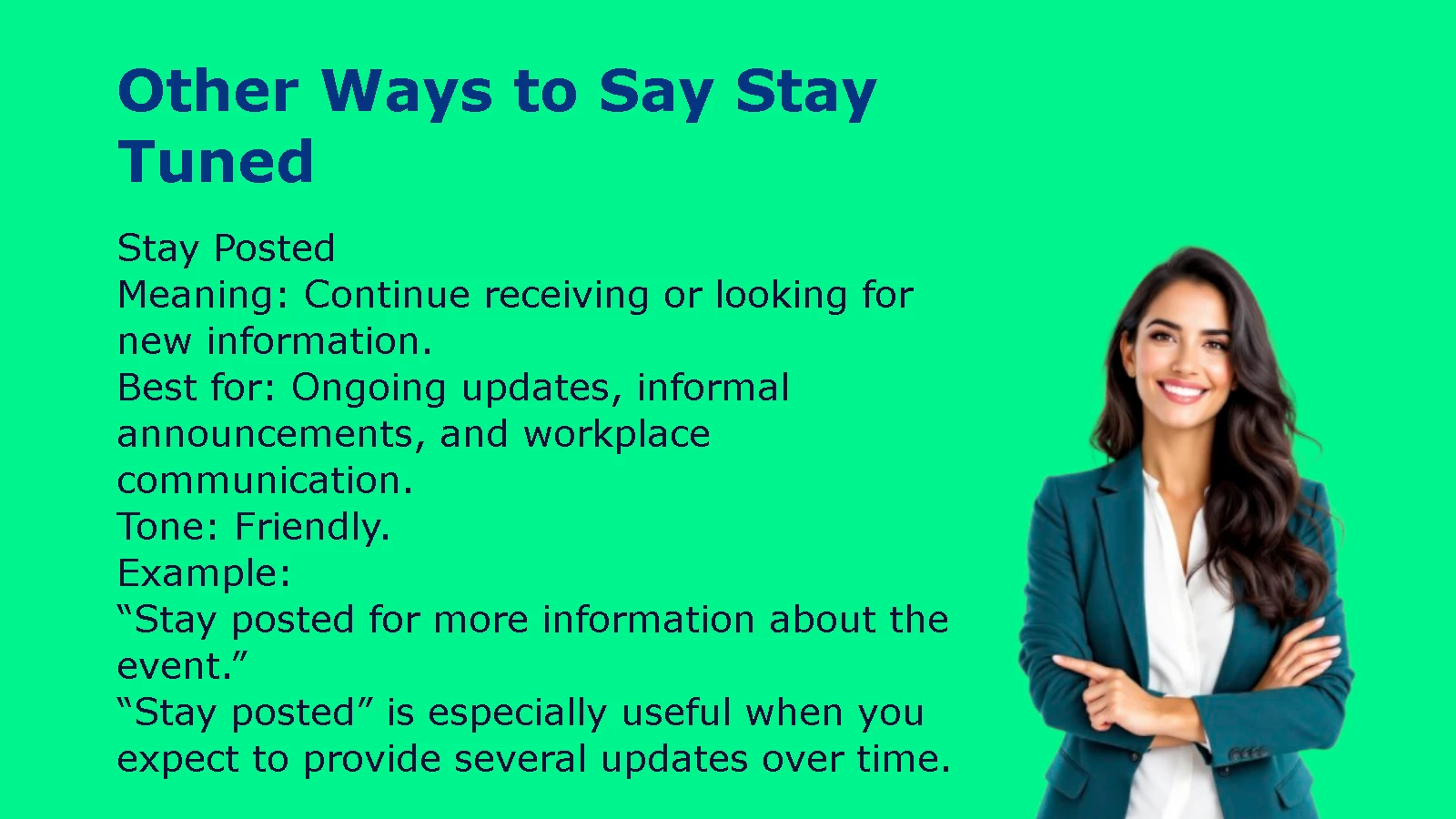
3. Stay Posted
Meaning: Continue receiving or looking for new information.
Best for: Ongoing updates, informal announcements, and workplace communication.
Tone: Friendly.
Example:
“Stay posted for more information about the event.”
“Stay posted” is especially useful when you expect to provide several updates over time.
4. Check Back Soon
Meaning: Return later because new information will be available.
Best for: Websites, blogs, event pages, and online announcements.
Tone: Neutral.
Example:
“Check back soon for the full event schedule.”
This is a particularly good choice when you’re directing people back to a webpage.
5. More Details Are Coming Soon
Meaning: Additional information will be provided in the near future.
Best for: Announcements, websites, product launches, and event information.
Tone: Neutral.
Example:
“More details are coming soon, including the full list of speakers.”
Unlike “stay tuned,” this phrase directly states what is happening.
6. We’ll Keep You Updated
Meaning: You will receive new information as it becomes available.
Best for: Work, customer communication, projects, and professional emails.
Tone: Professional.
Example:
“We’re still reviewing the schedule, but we’ll keep you updated.”
This is one of the strongest professional alternatives to stay tuned because it focuses on communication rather than asking the reader to wait.
7. We’ll Share More Soon
Meaning: More information will be provided shortly.
Best for: Workplace messages, announcements, newsletters, and social media.
Tone: Professional and friendly.
Example:
“We’re finalizing the details now, and we’ll share more soon.”
It sounds natural without being overly formal.
8. Look Out for More Information
Meaning: Pay attention because additional information will be provided.
Best for: Events, newsletters, school announcements, and general communication.
Tone: Friendly.
Example:
“Look out for more information about registration next week.”
This works well when you’re telling readers to expect a specific type of update.
9. Keep Watching for Updates
Meaning: Continue checking or paying attention for new developments.
Best for: News, live events, product announcements, and ongoing stories.
Tone: Neutral.
Example:
“Keep watching for updates as the project moves forward.”
It’s a useful option when information will arrive in stages.
10. Watch This Space
Meaning: Pay attention because something new or important will be announced.
Best for: Websites, social media, marketing, and event announcements.
Tone: Friendly.
Example:
“We have an exciting announcement coming next week, so watch this space.”
This phrase is particularly useful for promotional content.
11. Follow for Updates
Meaning: Follow an account or page to receive future information.
Best for: Social media.
Tone: Casual.
Example:
“Follow us for updates on upcoming events.”
This is more specific than “stay tuned because it tells the audience exactly how to receive future information.
12. More Information Will Follow
Meaning: Additional information will be provided later.
Best for: Formal emails, notices, reports, and official communication.
Tone: Formal.
Example:
“More information will follow once the final schedule has been confirmed.”
This is a good choice when “stay tuned” would sound too casual.
13. Further Details Will Be Announced
Meaning: Additional information will be officially provided later.
Best for: Formal announcements, organizations, events, and public notices.
Tone: Formal.
Example:
“Further details will be announced after the application period closes.”
This works best when you’re describing a planned announcement rather than casual updates.
14. Keep Checking for Updates
Meaning: Continue returning to a source to find new information.
Best for: Websites, event pages, project updates, and announcements.
Tone: Neutral.
Example:
“Keep checking for updates as we finalize the event schedule.”
It gives the reader a clear action instead of simply saying “stay tuned.”
15. We’ll Let You Know
Meaning: You will receive information when something has been decided or becomes available.
Best for: Work, customer service, personal messages, and everyday conversation.
Tone: Friendly.
Example:
“We’re waiting for confirmation, and we’ll let you know as soon as we hear back.”
This sounds natural when you’re speaking directly to one person or a small group.
16. Keep Watching
Meaning: Continue paying attention because something else is coming.
Best for: Videos, live events, entertainment, and promotional content.
Tone: Casual.
Example:
“Keep watching to see what happens next.”
It’s especially natural when the audience is already watching something.
17. More to Come
Meaning: Additional information, content, or developments are expected.
Best for: Social media, newsletters, announcements, and marketing.
Tone: Friendly.
Example:
“We’ve shared the first few updates, but there’s more to come.”
This is short and useful when you want an upbeat tone.
18. More Updates Are on the Way
Meaning: Additional updates are expected soon.
Best for: Projects, events, product announcements, and social media.
Tone: Friendly.
Example:
“More updates are on the way as we prepare for the opening.”
It works well when you want to create anticipation without sounding too promotional.
19. Keep Checking Back
Meaning: Return later because new information will be posted.
Best for: Websites, event pages, and online announcements.
Tone: Neutral.
Example:
“Keep checking back for ticket information.”
This is especially natural when the audience needs to revisit a specific page.
20. We’ll Provide Updates
Meaning: New information will be communicated as it becomes available.
Best for: Business communication, projects, customers, and official announcements.
Tone: Professional.
Example:
“We’ll provide updates as soon as the next phase is complete.”
It’s straightforward and works well in professional writing.
Professional Alternatives to “Stay Tuned”
If you’re writing a business email or workplace announcement, “stay tuned” can sometimes feel too casual. You can replace it with a phrase that clearly explains what will happen next.
Good choices include:
- We’ll keep you updated.
- We’ll share more soon.
- We’ll provide updates as they become available.
- More information will follow.
- We’ll let you know once we have confirmation.
- Further details will be announced soon.
- We’ll keep you informed.
For example:
Instead of:
“Stay tuned for an update on the project.”
You could write:
“We’ll keep you updated as the project progresses.”
Or:
“We’ll share more information once the timeline has been finalized.”
These versions sound more purposeful because they tell the reader how and when communication will happen.
Formal Ways to Say “Stay Tuned”
For formal letters, official announcements, corporate communication, and public notices, consider:
More information will follow.
“More information will follow once the review is complete.”
Further details will be announced.
“Further details will be announced after the final decision.”
Additional information will be provided.
“Additional information will be provided when the new schedule is confirmed.”
We will provide updates as they become available.
“We will provide updates as they become available.”
We will keep you informed.
“We will keep you informed of any changes to the schedule.”
These phrases are more formal because they focus on the communication process rather than using the conversational command “stay tuned.”
Casual Ways to Say “Stay Tuned”
For friends, social media followers, communities, and informal messages, you have more freedom.
Natural choices include:
- Keep an eye out.
- Stay posted.
- Check back soon.
- Watch this space.
- Keep watching.
- More to come.
- More updates are on the way.
- Follow for updates.
For example:
“We’ve got something exciting planned. Keep an eye out!”
Or:
“More to come, so stay posted!”
These options create a relaxed tone without sounding overly formal.
Other Ways to Say “Stay Tuned” in an Email
The best wording depends on what you’re promising the recipient.
When you’re waiting for a decision:
“I’ll let you know as soon as we have a final decision.”
When more information is coming:
“We’ll share more details once everything is confirmed.”
When you’re sending regular updates:
“We’ll keep you updated as the project progresses.”
When the recipient needs to check a website:
“Please check back soon for the latest information.”
When writing to a customer:
“We’ll provide an update as soon as we have more information.”
When announcing an upcoming event:
“Further details will be announced soon.”
These alternatives are generally clearer than “stay tuned” because they tell the recipient what to expect.
“Stay Tuned” vs. “Keep an Eye Out”
These phrases are close, but they’re not identical.
Stay tuned means continue paying attention or checking for future information.
Keep an eye out means watch for something specific that is expected to appear.
Compare:
“Stay tuned for more news.”
“Keep an eye out for your confirmation email.”
The first is broad. The second points to a specific thing.
If you’re telling someone to look for an email, announcement, message, or update, keep an eye out can be more precise.
“Stay Tuned” vs. “Stay Posted”
Both phrases can tell someone that more information is coming.
Stay tuned is broader and can refer to future news, content, announcements, or events.
Stay posted more directly suggests that the person will receive or find updates.
For example:
“Stay tuned for our next announcement.”
“Stay posted for updates on the schedule.”
The difference is small, so either can work in many informal situations.
“Stay Tuned” vs. “Check Back Soon”
These expressions tell the reader to do slightly different things.
Stay tuned asks someone to continue paying attention.
Check back soon specifically tells someone to return later.
For example:
“Stay tuned for more information.”
“Check back soon for the full schedule.”
The second sentence is particularly useful for websites and online pages.
“Stay Tuned” vs. “Watch This Space”
Watch this space is another friendly way to tell people that an announcement or development is coming.
It is especially useful in promotional content and online communication.
For example:
“A new collection is coming soon. Watch this space.”
You could also say:
“A new collection is coming soon. Stay tuned.”
Both work, but “watch this space” can feel more promotional and anticipatory.
How to Choose the Right Alternative
Think about the action you want your audience to take.
| Phrase | Tone | Best For | Example |
| Keep an eye out | Friendly | Specific upcoming information | “Keep an eye out for an email.” |
| Watch for updates | Neutral | News and projects | “Watch for updates next week.” |
| Stay posted | Friendly | Ongoing updates | “Stay posted for more details.” |
| Check back soon | Neutral | Websites | “Check back soon for the schedule.” |
| We’ll keep you updated | Professional | Work and business | “We’ll keep you updated.” |
| We’ll share more soon | Professional | Announcements | “We’ll share more soon.” |
| More information will follow | Formal | Official communication | “More information will follow.” |
| Watch this space | Friendly | Promotions and announcements | “Watch this space for news.” |
| Follow for updates | Casual | Social media | “Follow for updates.” |
| More to come | Friendly | Social media and announcements | “There’s more to come.” |
Common Questions
What are other ways to say “stay tuned”?
Natural alternatives include keep an eye out, stay posted, watch for updates, check back soon, watch this space, we’ll keep you updated, and more details are coming soon.
What is a professional way to say “stay tuned”?
In professional communication, try “We’ll keep you updated,” “We’ll share more soon,” “We’ll provide updates as they become available,” or “More information will follow.”
What is a formal way to say “stay tuned”?
Good formal choices include “More information will follow,” “Further details will be announced,” and “Additional information will be provided.”
What is a casual way to say “stay tuned”?
You can say “Keep an eye out,” “Stay posted,” “Check back soon,” “Watch this space,” or “More to come.”
What can I say instead of “stay tuned” in an email?
For a professional email, use “We’ll keep you updated,” “We’ll let you know,” “We’ll share more details soon,” or “We’ll provide an update once we have more information.”
Is “stay tuned” professional?
“Stay tuned” can be used in professional communication, particularly in marketing, announcements, and informal workplace messages. However, “we’ll keep you updated” or “more information will follow” may sound more polished in formal business writing.
Is “stay posted” the same as “stay tuned”?
They have very similar meanings when you’re telling someone that more information is coming. Stay posted tends to emphasize receiving or checking for updates, while stay tuned is broader.
Is “check back soon” the same as “stay tuned”?
Not exactly. Check back soon specifically asks someone to return later, often to a website or online page. Stay tuned can simply mean to continue paying attention.
What is a good alternative to “stay tuned” for social media?
Try “Follow for updates,” “Keep an eye out,” “Watch this space,” “More to come,” or “Stay posted.” The best choice depends on whether you want to sound informative, friendly, or promotional.
Final Thoughts
There are plenty of natural other ways to say stay tuned, but the best phrase depends on what you want your audience to do.
Use “keep an eye out” when you’re pointing people toward something specific. Choose “check back soon” for websites. Use “we’ll keep you updated” in professional communication. For formal announcements, “more information will follow” is a clean choice. And for social media, “follow for updates” or “watch this space” can work well.
Rather than replacing “stay tuned” with a random synonym, choose the expression that tells your reader exactly what to expect next.